The Great American Betrayal


The Great American Betrayal
Provpnadvice.com – As the United States marks its 250th anniversary, the celebration feels more like a somber reflection than a triumphant march. For many citizens, the milestone evokes a sense of disconnection rather than pride, much like checking a bank statement after a disastrous weekend at the casino. Public sentiment has shifted dramatically, with fewer Americans expressing unshakable confidence in their nation’s institutions than at any point in the past quarter-century. This disillusionment stems from a combination of factors that have steadily eroded the once-unshakable pillars of American democracy.
The Fractured Foundations of Governance
Historically, the country’s bureaucratic and legal systems served as buffers against collective illusions, ensuring that the populace’s aspirations were tempered by practical realities. But today, these mechanisms appear to have abandoned their role as stabilizers. Congress, once a symbol of legislative authority, now operates with a public approval rating that rivals the skepticism reserved for head lice or used-car salesmen. Laws are no longer crafted to empower citizens; instead, they are written by donors for donors, cloaked in legal jargon so complex it functions like a labyrinth, obscuring corporate interests from view.
“The audience is beginning to realize the pilots spend more time fighting over the controls than actually flying the plane.”
What was once a process of collaborative governance has devolved into a system of self-serving agendas, where legislation becomes a tool for maintaining power rather than addressing public needs. The judiciary, too, has lost its neutral veneer. The Supreme Court, once celebrated as the nation’s impartial referee, now resembles an in-house legal department for corporations, rewriting rules to benefit those already in control. This shift has deepened public cynicism, with a majority of Americans viewing the court as a force aligned with special interests rather than the common good.
The Spiritual Vacuum and Social Fragmentation
When traditional institutions faltered, people turned to faith for solace. Yet even religious communities have become hollow, their pews increasingly occupied by the elderly and disengaged. Once vibrant congregations are now repurposed as trendy cafes or nightlife venues, their Sunday services replaced by the hum of espresso machines or the buzz of dance music. As these spaces emptied, so too did the social safety nets that once bound communities together. Family networks, neighborhood support systems, and even basic trust in one another have given way to economic precarity and emotional isolation.
Millennials and Gen Z, raised in an era of digital connection, now experience loneliness as deeply as those who once felt it in the physical world. The erosion of community ties has left citizens adrift in a society where soaring rents and stagnant wages define the daily struggle, while the promise of collective solidarity fades into memory.
The Political Theater of Discontent
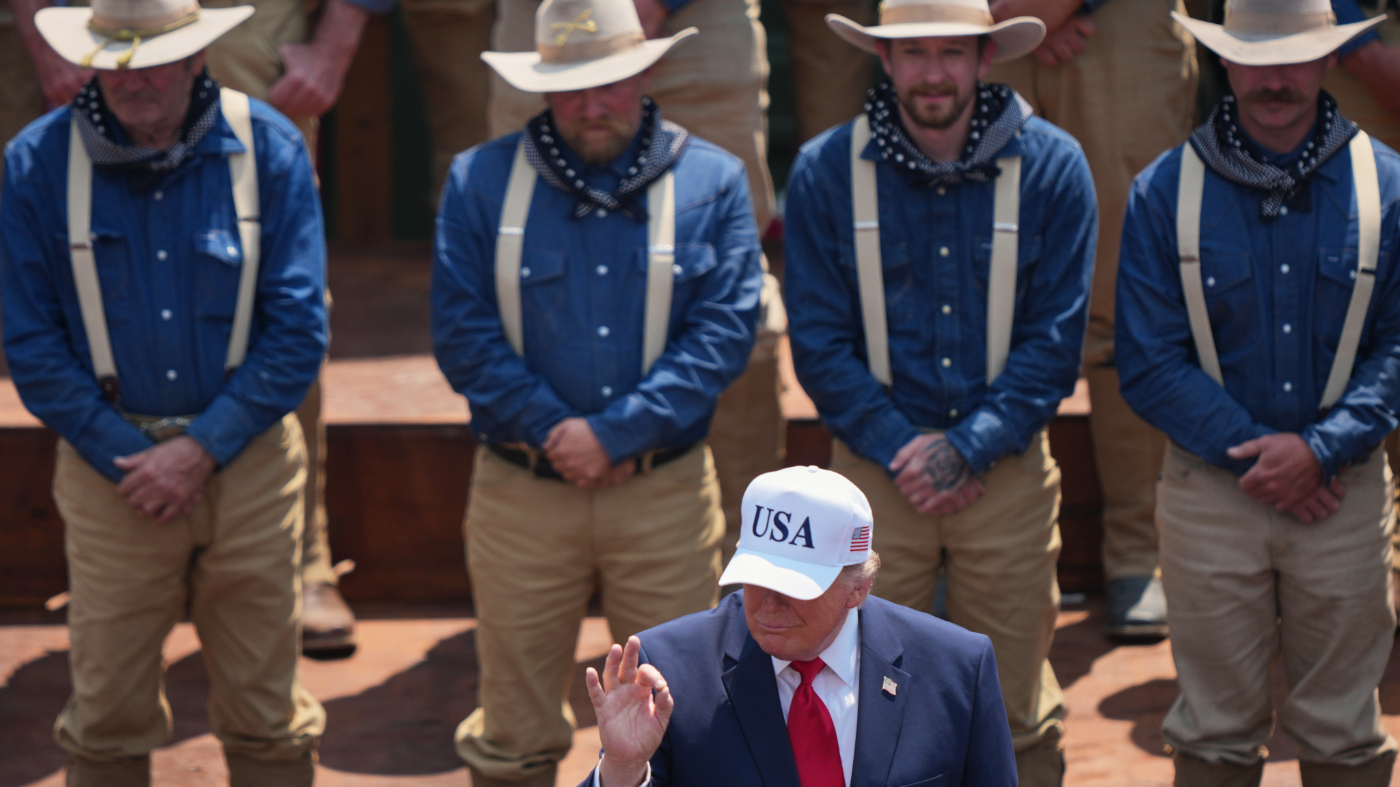
Political leadership, too, has failed to inspire hope. The White House, once seen as the cockpit of the free world, now feels more like a high-stakes nursing home. President Joe Biden navigated his term with the hesitant steps of a man who had forgotten the purpose of the kitchen, his authority often questioned as he struggled to maintain momentum. Meanwhile, President Trump returned to the scene of the presidency like a returning actor, treating the Oval Office as a family estate and the nation as a stage for his personal narrative. His outbursts, delivered in caps-lock fervor, became the soundtrack of an increasingly polarized political landscape.
Trump’s pledge to keep America out of new wars clashed with his decision to deploy military force in Iran, drawing the country into another Middle Eastern quagmire. This contradiction highlighted a broader trend: leaders who once promised stability now seem more intent on stoking division. The result is a public that views governance not as a partnership but as a battleground, where every election becomes a referendum on the opposing side’s supposed conspiracies.
The Algorithmic Amplification of Division
The tech industry has accelerated this unraveling, recognizing that outrage generates more engagement than reasoned discourse. Algorithms, designed to maximize user interaction, thrive on conflict, rewarding those who stoke fear and hatred with clicks and likes. In this environment, peace is an afterthought, while sensationalism drives profits. Citizens are trapped in personalized digital echo chambers, each reinforcing the worst aspects of their worldview without allowing room for compromise or nuance.
Conservatives scan the horizon for Marxist radicals, while progressives spy fascists in the lawnmowers. This perpetual state of ideological alarm has turned the American public into unwitting participants in a manufactured conflict, their attention and trust siphoned by tech cartels who profit from collective misery. The result is a society where truth is secondary to virality, and dialogue is replaced by dueling narratives that never reach a consensus.
The Dawn of AI and the Erosion of Reality
With artificial intelligence on the horizon, the next phase of this crisis is already in motion. AI promises to amplify the detachment of the media landscape, where facts are no longer anchors but mere ornaments. Soon, debates may no longer center on public policy but on whether the sky is blue or a deepfake, with algorithms deciding which truth to present to whom. The line between reality and illusion will blur further, leaving citizens to question not just the world around them, but their own perceptions.
The tragedy of this moment lies in the stark contrast between the people and the systems they once trusted. Despite their decency and desire for simple lives, Americans find themselves in a malfunctioning simulation, where their deepest fears are amplified, their choices manipulated, and their identities fractured. The true betrayal is not of individuals, but of the institutions meant to uplift them—structures that have become tools of self-preservation rather than service. As these systems continue to break down, the question remains: how long before the American spirit itself is at risk of fading into silence?