Democrats rail against corruption after Trump financial disclosure

Democrats Criticize Trump’s Cryptocurrency Earnings Amid Financial Disclosure
Provpnadvice.com – Recent revelations about President Donald Trump’s financial holdings have sparked fierce criticism from Democratic lawmakers, who accuse him of leveraging his presidency to profit from cryptocurrency ventures. In a financial disclosure report filed on Tuesday, Trump disclosed over $1 billion in income tied to the digital asset industry, drawing immediate scrutiny over potential conflicts of interest and the ethical implications of his wealth accumulation. The report includes significant sums from two key sources: World Liberty Financial, a crypto business he co-founded with his sons in the fall of 2024, and an undisclosed meme coin operation linked to his administration.
Breakdown of Trump’s Crypto Income
The financial disclosure highlights $594 million attributed to World Liberty Financial, a venture that has been at the center of debates about Trump’s business dealings. This figure alone underscores the scale of his involvement in the crypto market. Separately, another $635 million is reportedly connected to a presidential meme coin, which has raised questions about how the White House is using its influence to generate personal wealth. Democratic lawmakers argue that these earnings represent a systematic exploitation of the public trust, with some suggesting the president’s financial gains exceed those from his entire career prior to entering the Oval Office.
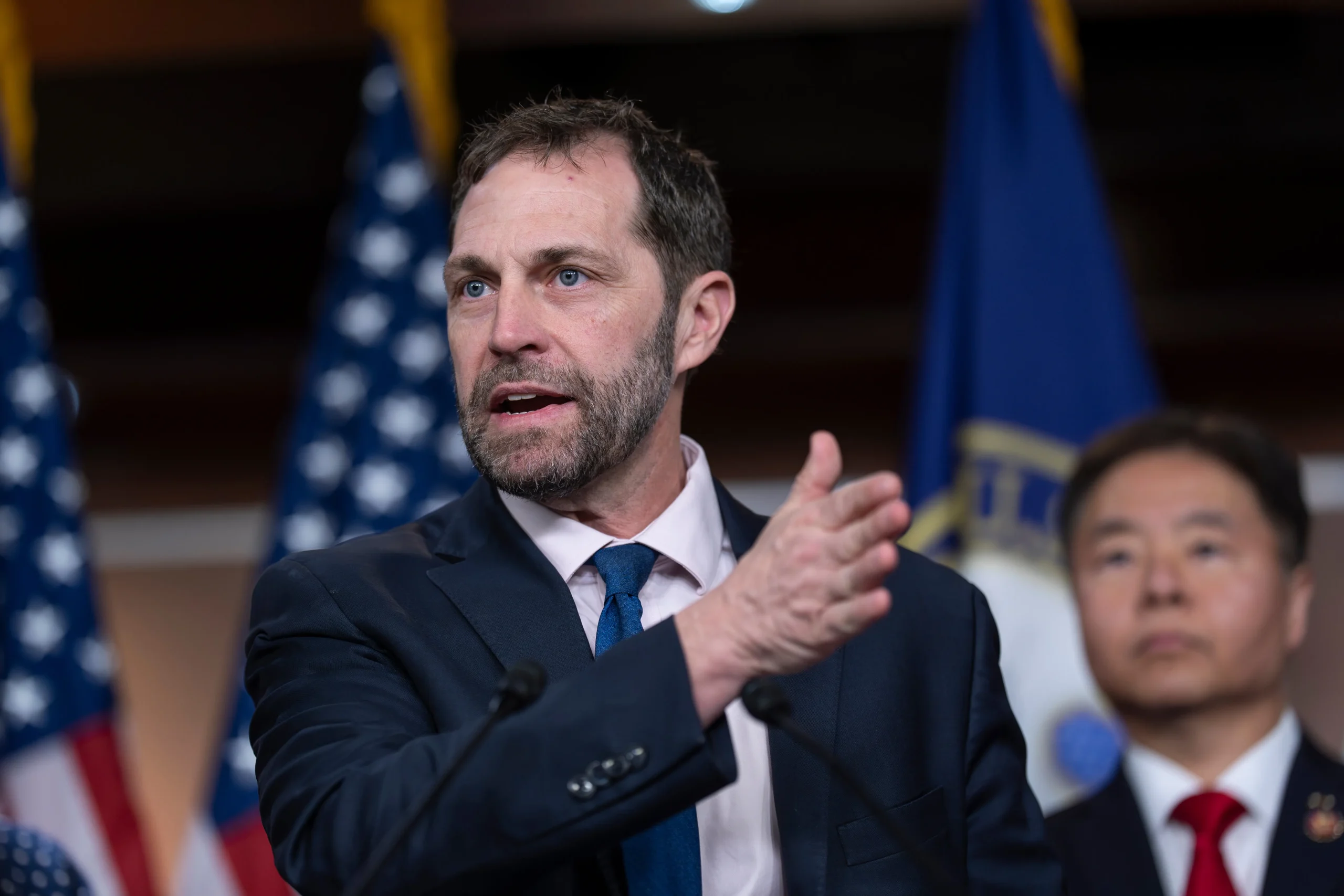
“Trump made $1+ billion from his crypto ventures while in office,” Rep. Jason Crow (D-Colo.) stated in a social media post on Wednesday. “Today he’s taking his first flight on his illegal $400 million gift from a foreign government. This grift and corruption is staggering. Accountability is coming.”
The accusations come as Trump’s administration faces mounting pressure over its close ties to the cryptocurrency sector. His public comments about the industry have been notably favorable, and his family’s businesses are now central to the narrative of potential corruption. Sen. Adam Schiff (D-Calif.), who has been a vocal critic of Trump’s financial practices, noted that the president’s earnings in his first year of office surpassed his total income during his previous life. “Meanwhile, most Americans worked hard to just break even. This is the cost of corruption,” Schiff wrote on social media late Tuesday.
Regulatory Shifts Under Trump’s Leadership
Trump’s administration has taken a proactive stance in supporting the cryptocurrency industry, often prioritizing deregulation over oversight. This approach has led to the withdrawal of ongoing investigations into crypto firms and the dismissal of cases against prominent companies. Additionally, the administration recently enacted the Guiding and Establishing National Innovation for U.S. Stablecoins (GENIUS) Act, a major legislative achievement that aims to streamline the regulation of stablecoins. The law is seen as a step toward fostering growth in the digital asset market, but it has also been criticized for potentially opening the door to more financial opportunities for the president and his allies.
Despite these regulatory advancements, a key piece of legislation remains unresolved. The Digital Asset Market Clarity Act, also known as the CLARITY Act, is designed to provide a comprehensive framework for the crypto industry but has stalled in the Senate for nearly a year. Lawmakers are still negotiating its provisions, with Democrats pushing for a clause that would limit the president’s ability to profit from cryptocurrency transactions while in office. Sen. Elizabeth Warren (D-Mass.) emphasized this point in a social media post on Tuesday, stating, “The crypto legislation heading to the Senate floor must stop the President and his family from continuing to profit off crypto.”
Public Perception and Political Fallout
The controversy over Trump’s crypto earnings has intensified as his administration continues to align itself with the industry. Critics argue that the president’s financial disclosures fail to fully account for his personal gains, particularly when it comes to transactions involving foreign governments. For instance, Trump recently received a $400 million gift from Qatar, which has been described as a “illegal” benefit in some Democratic circles. This has fueled speculation about the extent of his wealth and how it may have been bolstered by political connections.
Democratic lawmakers have also pointed to the broader economic context of Trump’s earnings, comparing them to the struggles of average Americans. “Most people are just trying to survive, yet the president is raking in billions from his crypto deals,” Rep. Seth Magaziner (D-R.I.) remarked, adding, “When Democrats are in the majority, we are going to ban this bulls—.” The senator’s comments reflect a growing frustration among Democrats about the disparity between Trump’s wealth and the financial challenges faced by the public.
Trump’s Defense of His Financial Practices
In response to the allegations, Trump defended his role in the cryptocurrency industry during a press briefing on Wednesday. He claimed that his personal finances are managed by “funds that run my money” and emphasized that he does not directly interfere with the operations of his family’s businesses. “I don’t get involved in my personal, we have funds that run my money,” he said. “They invest my money. I don’t talk to them. I don’t even speak to them. So, I have many people, I don’t know what they call them, closed accounts or something, you put their money and that’s it. I don’t talk to them. They’re big institutions, and they run it.”
Trump’s argument hinges on the idea that his financial activities are outsourced to professional entities, which he claims operate independently of his political decisions. However, critics counter that this separation is not absolute, and the president’s influence over these businesses could still create conflicts of interest. The financial disclosure, while detailed, has been scrutinized for its ability to capture the full scope of Trump’s crypto-related profits, particularly when it comes to transactions with foreign partners and the role of his family in managing the assets.
As the debate over Trump’s crypto earnings continues, it highlights the tension between economic growth and ethical accountability in public office. While his administration’s pro-crypto policies have been praised for their innovation and deregulatory benefits, the scrutiny over his personal gains suggests that the political landscape is becoming increasingly polarized over the issue of financial transparency. The upcoming legislative discussions on the CLARITY Act may serve as a pivotal moment in determining whether the president’s crypto ventures will be subject to stricter oversight or continue to operate with minimal restrictions.