Mamdani says he thinks a democratic socialist can be elected president

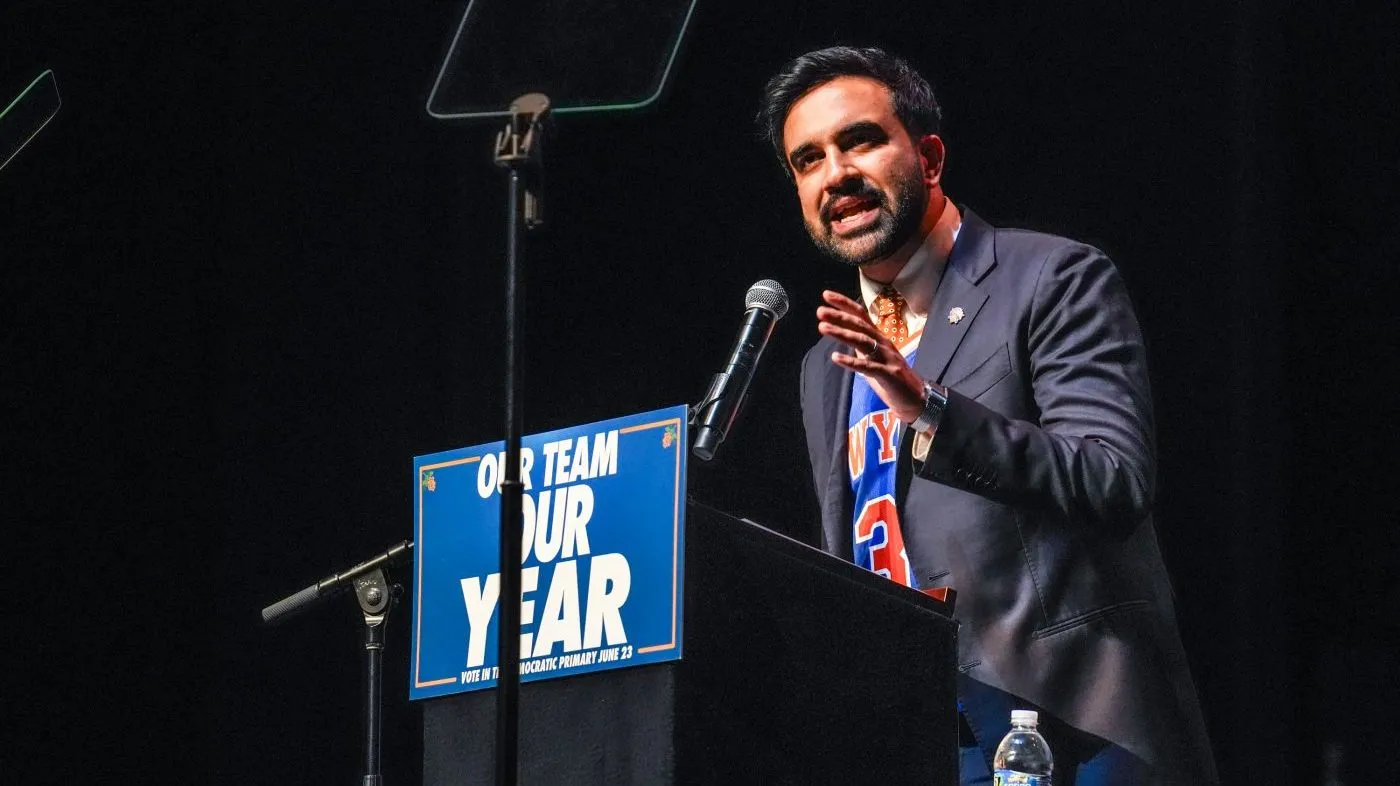
Mamdani Advocates for Democratic Socialist Leadership in U.S. Presidential Race
Provpnadvice.com – Mayor Zohran Mamdani of New York City, a Democrat, has expressed confidence in the viability of a democratic socialist winning the presidency. His recent remarks, shared during an appearance on ABC’s “This Week,” underscore a growing belief among progressive leaders that the political landscape is shifting in favor of candidates who prioritize economic equality and social justice. Mamdani’s assertion comes amid a wave of support for democratic socialist principles within local elections, suggesting a broader movement toward left-leaning policies at the national level.
Local Success Fuels National Ambitions
Earlier this week, three candidates backed by Mamdani triumphed in New York City’s primary elections, marking a significant endorsement of democratic socialist ideals. Darializa Avila Chevalier, Brad Lander, and Claire Valdez all secured victories in their respective races, with Avila Chevalier and Lander defeating established Democratic opponents. These results, Mamdani argues, reflect a nationwide appetite for the Democratic Party to refocus its efforts on addressing the struggles of working-class Americans rather than solely targeting President Trump.
Mamdani emphasized that the success of these candidates demonstrates a growing public demand for policies that directly tackle issues like housing affordability, healthcare access, and economic inequality. “The recent electoral outcomes in my city indicate that people across the country are looking for a party that champions the interests of working people,” he stated during his interview. This sentiment aligns with his broader vision for the Democratic Party to adopt a more progressive platform, one that resonates with everyday citizens rather than being shaped by corporate interests or political consultants.
Progressive Policies and Public Accountability
During the interview, Mamdani highlighted his administration’s achievements as evidence of the feasibility of democratic socialist policies. He pointed to initiatives that expanded childcare access and reduced crime rates as examples of how such principles can translate into tangible results. “When people ask, ‘Why can’t I afford my rent?’ or ‘Why can’t I afford my groceries?’ we need to respond with solutions that are concrete and impactful,” he said, reinforcing his belief in the importance of addressing systemic challenges head-on.
Mamdani’s comments also touched on the role of the Democratic Socialists of America (DSA) in shaping the future of the party. According to the DSA’s official website, the organization boasts over 100,000 members, a number that has grown substantially in recent years. Ashik Siddique, co-chair of the DSA, echoed Mamdani’s optimism, stating that the movement is now actively preparing for the 2028 presidential campaign. “We need to have proactive conversations about what voters truly want,” Siddique told The Hill, stressing the importance of clear messaging and policy focus.
Democratic Socialism and the 2028 Horizon
The push for democratic socialism has gained momentum since the 2020 election, with figures like Sen. Bernie Sanders (I-Vt.) continuing to serve as its ideological anchor. Sanders, a longtime advocate for the movement, came in second in the Democratic presidential primary in both 2016 and 2020, yet his influence remains strong among progressive voters. His candidacy, alongside Mamdani’s local efforts, has helped normalize the idea of a democratic socialist as a potential national leader.
Despite this growing support, Republicans have consistently labeled democratic socialists as “communists” and criticized their policies as being out of touch with mainstream American values. They have specifically positioned Mamdani as the face of the movement, arguing that his progressive agenda represents a threat to traditional economic systems. However, Mamdani has not shied away from this label, instead framing it as a badge of honor for his commitment to transformative change.
When asked about the Republican characterization of him as the “poster child” for democratic socialism, Mamdani responded with characteristic confidence. “Let them,” he said, redirecting the conversation to his record as a city leader. He cited the city’s improved childcare infrastructure and declining crime rates as proof that democratic socialist policies can succeed in practice. “We don’t have to imagine a future where a socialist wins—we’ve already delivered results,” he added, underscoring the practicality of his vision.
Mamdani’s rhetoric has also sparked discussions about the potential for a democratic socialist to win the presidency in 2028. His belief in the movement’s viability is bolstered by the recent success of progressive candidates in New York, a city often seen as a political battleground. These victories, he argues, signal a broader shift in voter priorities, with Americans increasingly seeking leaders who align with their economic and social concerns.
Challenges and Opportunities Ahead
While the prospects for democratic socialism in the U.S. appear promising, challenges remain. The party must navigate the complexities of a polarized political climate and build coalitions that extend beyond traditional strongholds. Mamdani’s experience as a mayor, however, provides a model for how this can be achieved. By implementing policies that directly address the needs of working-class communities, he has demonstrated that democratic socialist ideas can resonate with a wide range of voters.
Moreover, the success of candidates like Avila Chevalier and Lander highlights the importance of grassroots mobilization. These individuals, supported by the DSA, have managed to compete effectively against more established figures, suggesting a growing influence of progressive ideology in local politics. This dynamic could translate into a stronger presence for democratic socialists in national races, particularly as the 2028 election approaches.
As the political landscape evolves, Mamdani’s confidence in the movement’s potential is both inspiring and strategic. He envisions a future where the Democratic Party embraces a more radical platform, one that prioritizes the needs of ordinary Americans over partisan divides. “The direction the party should take is one that best serves working people,” he reiterated, emphasizing the need for a clear and consistent message.
While critics may view democratic socialism as a radical departure from mainstream politics, Mamdani argues that its principles are essential for addressing the root causes of inequality. He pointed to the current economic climate—marked by rising costs and stagnant wages—as proof that the status quo is no longer sufficient. “We’ve shown that it’s possible to create real change,” he said, adding that his victories in office have validated the movement’s approach.
Ultimately, Mamdani’s remarks reflect a larger trend within the Democratic Party: a desire to redefine its identity and appeal to a new generation of voters. His vision for the future of American politics is one where democratic socialism is not just an ideological stance but a practical strategy for improving the lives of working people. As the 2028 presidential race draws closer, his influence and that of the DSA may play a crucial role in shaping the next chapter of U.S. political history.
“I think the direction that the party should go in is how best to fight for working people,” Mamdani said. “I think we need to have a platform and a vision that doesn’t sound as if it was cooked up by consultants, but instead one that you would say in response to someone who’s asking, ‘Why can’t I afford my rent, why can’t I afford my groceries, why can’t I afford my childcare?’”
Mamdani’s confidence in the movement’s potential is not without precedent. The DSA’s growing membership and the success of progressive candidates in recent elections indicate that democratic socialism is gaining traction. While the path to the presidency may be long, Mamdani’s message is clear: the time for change is now, and the Democratic Party is poised to lead the charge. As he continues to advocate for his vision, the question remains whether it will translate into national success.