Usha Vance pokes fun at ‘political significance’ of maternity dress

Usha Vance Mocks ‘Political Significance’ of Maternity Dress
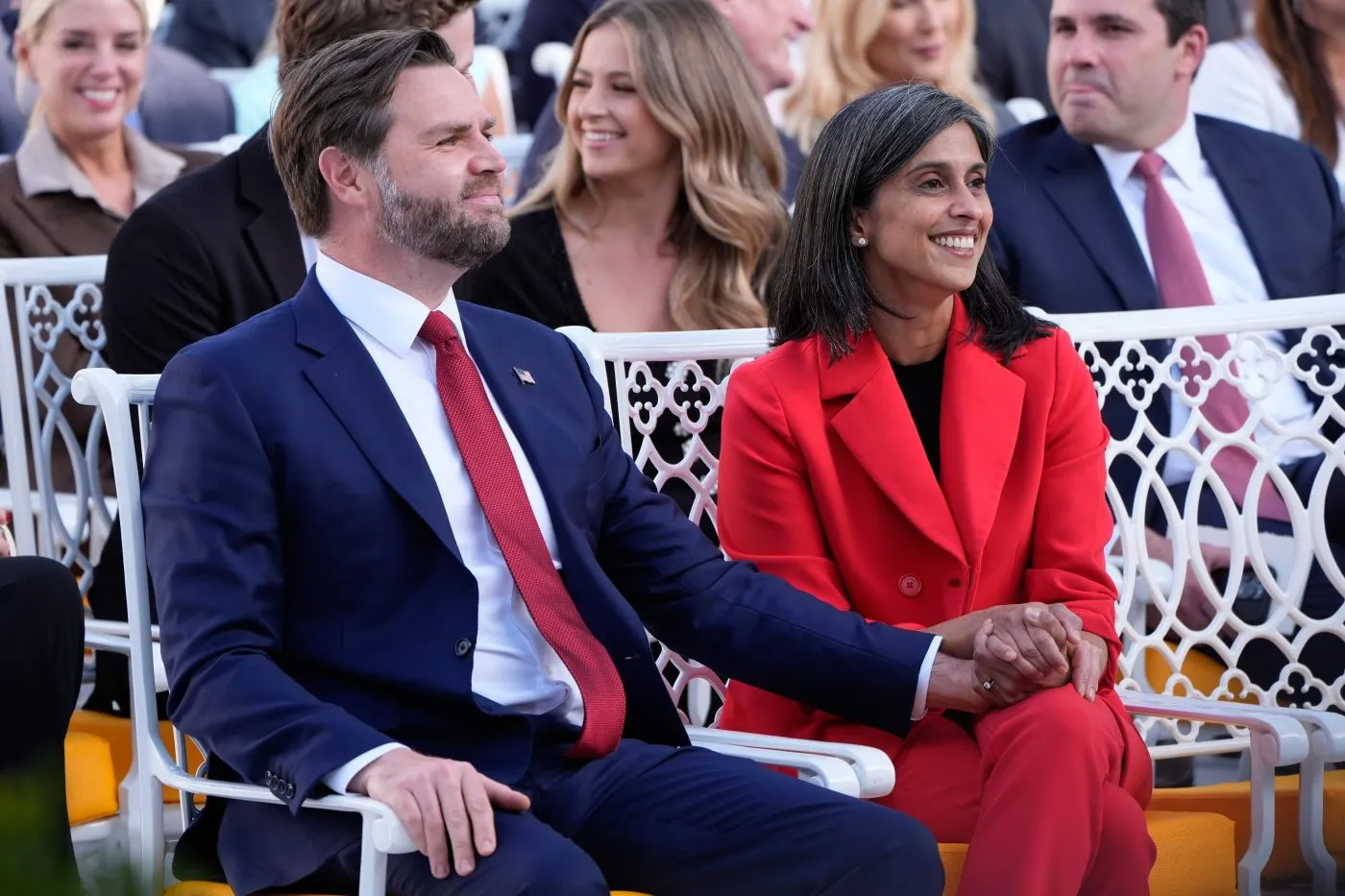
Provpnadvice.com – Second Lady Usha Vance recently sparked a lighthearted debate about the symbolic weight of everyday clothing when she humorously questioned the “political significance” of her $8.75 coral maternity dress from Old Navy. The comment came in response to a New York Times article that explored how the pregnancies of prominent figures in the Trump administration—such as herself, White House press secretary Karoline Leavitt, and deputy chief of staff Stephen Miller’s wife, Katie Miller—were strategically used to project an image of family-centric leadership. Vance’s witty remark, shared on social media, highlighted the contrast between the perceived importance of her attire and its modest price tag.
Maternity Wear as a Political Statement
The Times piece, titled “The Politics and Power of the Pregnancy Image,” delved into how the public perception of motherhood and fertility has been leveraged by the Trump administration to reinforce its narrative of stability and traditional values. Fashion critic Vanessa Friedman, the article’s author, argued that the women’s choices in maternity wear created a “notably consistent, and somewhat paradigm-shifting, picture of the White House’s family and fertility platform.” This analysis suggested that their outfits were more than just personal style—they were tools of political messaging, shaping how the administration was viewed through the lens of domesticity.
Vance’s response to the article was both playful and pointed. In a post that quickly gained attention, she quipped: “Now that we know the political significance of my $8.75 coral maternity dress from Old Navy, can’t wait to hear what the New York Times has to say about my elastic-waistband pants and compression socks!” Her humor underscored the irony of media scrutiny over seemingly trivial details, while also inviting a broader discussion about the extent to which public figures are judged for their appearance.
The $8.75 Dress and Its Symbolism
Vance’s initial reaction was prompted by the Times’ focus on how maternity wear could influence perceptions of power and influence. The article examined the curated image of pregnant women in the administration, noting how their choices were scrutinized for consistency and impact. By sharing her own experience with a modestly priced dress, Vance challenged the notion that such items were inherently political, suggesting that the media’s emphasis on their symbolism might be overblown.
To reinforce her point, Vance later posted a receipt proving that the coral maternity dress in question—featured in the article—was purchased for just $8.75 after discounts and coupons. The dress originally retailing for $44.99 became a focal point for the discussion, with critics and supporters alike debating its significance. Her husband, Vice President JD Vance, added to the humor by writing: “She bought a $50 dress for $8.75. America: meet your next director of the federal budget!” The couple’s playful banter drew attention to the absurdity of assigning high political value to low-cost clothing, while also showcasing their shared sense of wit.
Media Defense and Public Reaction
A New York Times spokesperson defended the article, stating that it aimed to offer a “fair and illuminating analysis of women in the Trump administration and their ownership of motherhood and image.” The statement, provided to USA TODAY, emphasized the article’s focus on how the administration’s female members used their roles as mothers to shape its public persona. This perspective framed the discussion as a broader exploration of gender dynamics in politics, rather than a critique of individual fashion choices.
The debate surrounding the article quickly evolved into a microcosm of larger conversations about the role of women in political life. Critics argued that the media’s attention to maternity wear was a way to reinforce stereotypes of female politicians as primarily concerned with family and appearance. Supporters, however, viewed the analysis as a valuable examination of how personal identity intersects with professional power. Vance’s response, while lighthearted, invited readers to consider the balance between public expectation and private expression.
Pregnancy and Family Life
The Vances, who are expecting their fourth child—a baby boy—in July, have long been in the spotlight for their family-oriented public image. They announced the pregnancy in January, marking another chapter in their journey as parents. The couple already has three children: Ewan, Vivek, and Mirabel. Their youngest, Mirabel, was born in December 2021, during JD Vance’s Senate campaign in Ohio. This timeline highlights how the Vances have consistently used their family life to underscore their commitment to traditional values, even as they navigate the complexities of high-profile politics.
Vance’s comments also reflected a broader trend in how expectant mothers in the Trump administration are portrayed. The article noted that their pregnancies were not just personal milestones but strategic assets in shaping the administration’s narrative. By linking maternity wear to political messaging, the piece sought to reveal how even the smallest details of appearance could be repurposed to reinforce larger ideological themes. Yet, Vance’s response suggested that such interpretations might be stretching the boundaries of what is genuinely significant in the public eye.
Reactions and Broader Implications
Reactions to Vance’s post were mixed, with some praising her for turning the spotlight back on the media’s selective focus, while others saw it as a deflection from the article’s core argument. The discussion also raised questions about how much weight is given to fashion in political narratives. For instance, the article’s analysis of maternity wear was part of a larger exploration of how women in power are often judged on different criteria than their male counterparts, with their choices in clothing and accessories scrutinized more intensely.
Despite the humor, the exchange underscored the cultural and political importance of maternal figures in the White House. The Vances’ upcoming child will add to this legacy, further embedding their family life into the fabric of the administration’s public image. As the debate over the symbolism of their maternity attire continues, it serves as a reminder of how personal moments can become public spectacles. Whether viewed as a clever rebuttal or a trivialization of serious political themes, Vance’s comments have reignited conversations about the intersection of identity, fashion, and power in the modern presidency.
In the end, the $8.75 dress remains a symbol of both the absurdity and the precision of political symbolism. While it may seem like a small detail, its inclusion in the narrative highlights how even the most mundane aspects of life can be transformed into powerful messages. The Vances’ response, however, reminds us that behind the scenes, the reality of their family life is just as grounded in everyday choices as the rest of us.