Supreme Court upholds Trump’s attack on asylum

Supreme Court Upholds Trump’s Attack on Asylum
Provpnadvice.com – On January 20, 2025, the day President Donald Trump began his second term, the administration took its first step toward closing the U.S. asylum system. This was followed by a more permanent measure on July 4, 2025, when a sweeping law was enacted to lock the door. Now, with the recent Supreme Court decision, the Trump administration has effectively sealed the border with irreversible barriers, cementing its stance on limiting asylum access.
A Systematic Closure of Doors
Trump’s policies have systematically dismantled pathways for refugees and asylum seekers, a strategy that has spanned years of executive action. The initial move came with a presidential proclamation that framed the southern border as a site of “alien invasion,” justifying the end of asylum rights for those arriving on U.S. soil. This declaration marked the first phase of a broader effort to restrict entry for those fleeing persecution.
By the same date, additional measures were introduced. The refugee resettlement program, a cornerstone of U.S. immigration policy since the 1980s, was indefinitely suspended. Safe Mobility offices in Latin America, where asylum applications were processed, were closed. Simultaneously, humanitarian parole programs for Cubans, Haitians, Nicaraguans, and Venezuelans were terminated, leaving these groups without a legal means to seek safety in the U.S.
Moreover, the CBP One app, a digital tool that had allowed asylum seekers to schedule appointments at the border, was repurposed to track and pressure individuals into “self-deportation.” This shift transformed the app from a convenience into a tool of coercion, reflecting the administration’s broader approach to immigration control.
A Lock and a Key: The One Big Beautiful Bill Act
The next phase of the administration’s plan was codified in the One Big Beautiful Bill Act, signed into law on July 4, 2025. This legislation allocated $46.5 billion for constructing a border wall and enhancing enforcement capabilities. It also provided $45 billion to expand Immigration and Customs Enforcement’s capacity for detention and deportation, effectively tripling its resources.
With this act, the Trump administration not only fortified physical barriers but also reinforced its ideological framework. The law’s provisions prioritized strict border control, aligning with the president’s vision of a more secure and orderly immigration system. However, critics argue that these measures have prioritized enforcement over compassion, creating a system that disadvantages those in need of protection.
Travel Bans and Resource Diversion
Trump further tightened control by imposing travel bans on 39 countries and the Palestinian territories, including major refugee-producing nations. These bans, which have been in place for years, act as a deterrent to asylum seekers from certain regions, forcing them to navigate an increasingly complex and restrictive system.
Additionally, the administration redirected personnel and resources from agencies like the Department of Defense, FBI, FEMA, DEA, IRS, and Social Security Administration to support immigration enforcement. This shift has created a cascading effect, where federal resources are diverted from other critical functions to bolster the border regime. The result is a system that prioritizes speed and efficiency in deportations over the thorough evaluation of asylum claims.
Brick and Mortar: The Supreme Court’s Role
The final and most definitive step in this closure came with the Supreme Court’s recent ruling. The court affirmed the Trump administration’s policy, allowing the U.S. to block asylum seekers from accessing protection through official border crossings. This decision means that applicants must “arrive” in the country before submitting their claims, effectively stripping them of their legal rights to seek asylum after reaching U.S. territory.
Secretary of State Marco Rubio played a pivotal role in reinforcing this system. In April 2025, he issued a cable requiring all consular officers to ask nonimmigrant visa applicants if they “fear harm or mistreatment in returning to their country of nationality or former habitual residence.” Those who answer “yes” are automatically denied visas, creating a catch-22 for individuals fleeing persecution. The rule has been criticized for its punitive nature, as it forces applicants to declare their fears upfront, with no opportunity for further explanation.
This approach has left asylum seekers with few options. If they truthfully state their fear of returning home, they are denied a visa. If they lie to secure a visa, they risk being denied asylum for having been dishonest. The system now hinges on the applicant’s ability to navigate these conflicting requirements, often at the cost of their safety.
Historical Context and Modern Implications
For over two centuries, the U.S. has been a refuge for those seeking asylum, from the Pilgrims to Afghan interpreters stranded in Qatar. Yet, under Trump’s leadership, the country has shifted toward a model that prioritizes border security over humanitarian principles. The Supreme Court’s endorsement of these policies marks a significant departure from this tradition, solidifying the administration’s vision of a closed-border approach.
While the anti-immigrant lobby has long argued that “bogus” asylum seekers exploit the system, the Trump administration has taken this critique to an extreme. By eliminating legal avenues for entry, it has effectively discredited asylum as a legitimate option. This has created a scenario where individuals fleeing violence and oppression are forced into a binary choice: either accept a visa without acknowledging their fears or risk being denied asylum after lying about their circumstances.
The impact of these policies is profound. Asylum seekers, who once had a clear path to safety, now face an intricate web of barriers. The closure of Safe Mobility offices, the suspension of refugee programs, and the reprogramming of federal resources have all contributed to a system that is less about providing protection and more about controlling movement. The metaphor of a sealed door with mortar and brick is no longer just symbolic—it is a literal representation of the U.S. border today.
“The Trump administration has effectively sealed the door for anyone needing to flee persecution and seeking U.S. protection. If applicants answer honestly, they are denied a visa. If they lie to secure one, they are denied asylum. The result is a system that punishes truth-tellers and silences those in need,” said Bill Frelick, the refugee and migrant rights director at Human Rights Watch.
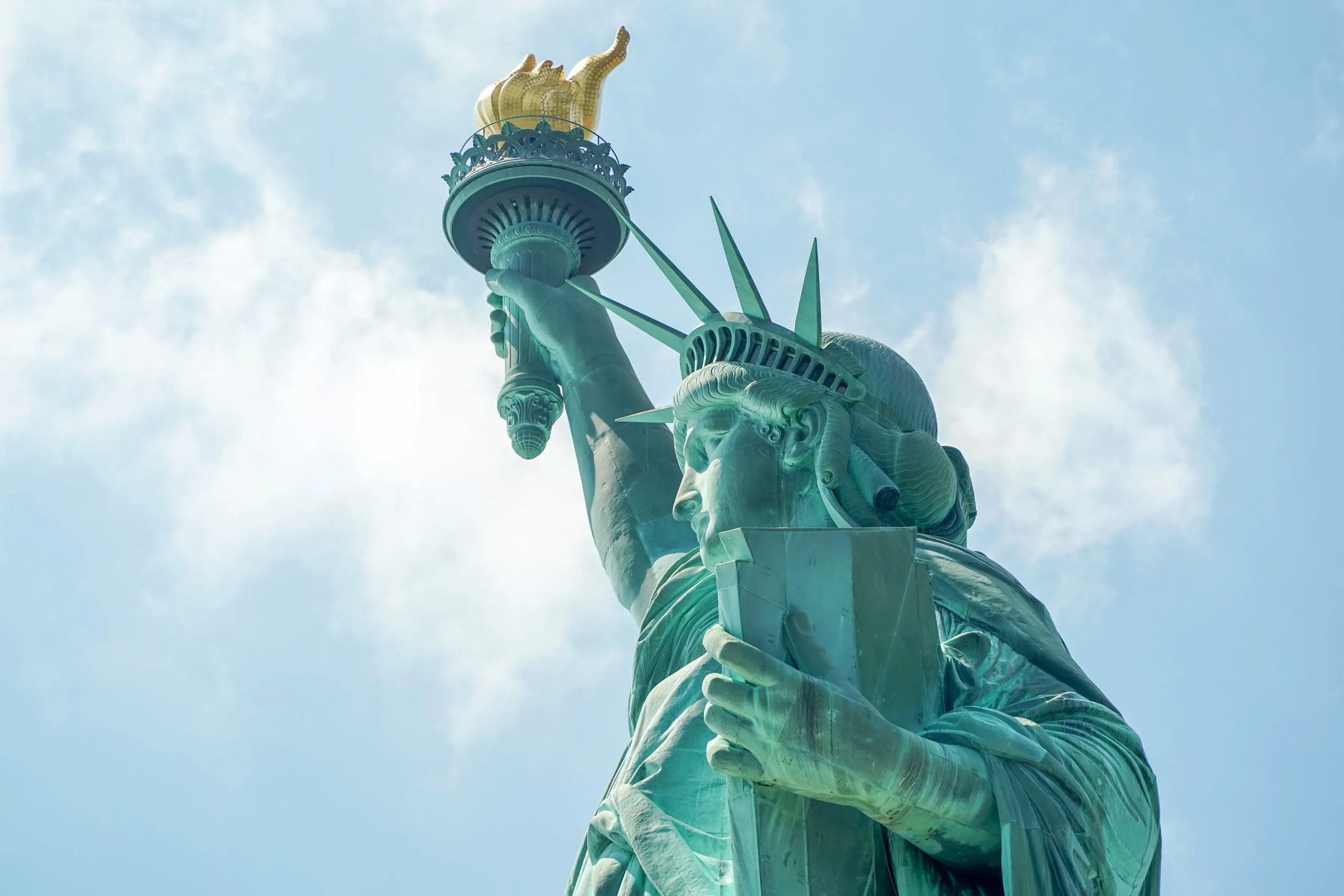
As the nation prepares to commemorate its 250th anniversary, the Trump administration’s policies stand as a testament to its interpretation of American values. Instead of celebrating the ideals of liberty and opportunity, the administration has reimagined symbols like Lady Liberty, replacing her torch with a stop sign and transforming proposed monuments into physical manifestations of exclusion. This transformation reflects a broader cultural shift in how the U.S. views its role as a sanctuary for the persecuted.
The closure of asylum access has far-reaching consequences. It not only affects the immediate lives of individuals but also shapes the future of U.S. immigration policy. With the Supreme Court’s backing, Trump’s vision of a secure border is now the law of the land, leaving the door to asylum permanently sealed. The question remains: what does this mean for the legacy of a country that once welcomed the world’s most vulnerable?