
Kevin Warsh confirmed as Fed chair, succeeding Jerome Powell
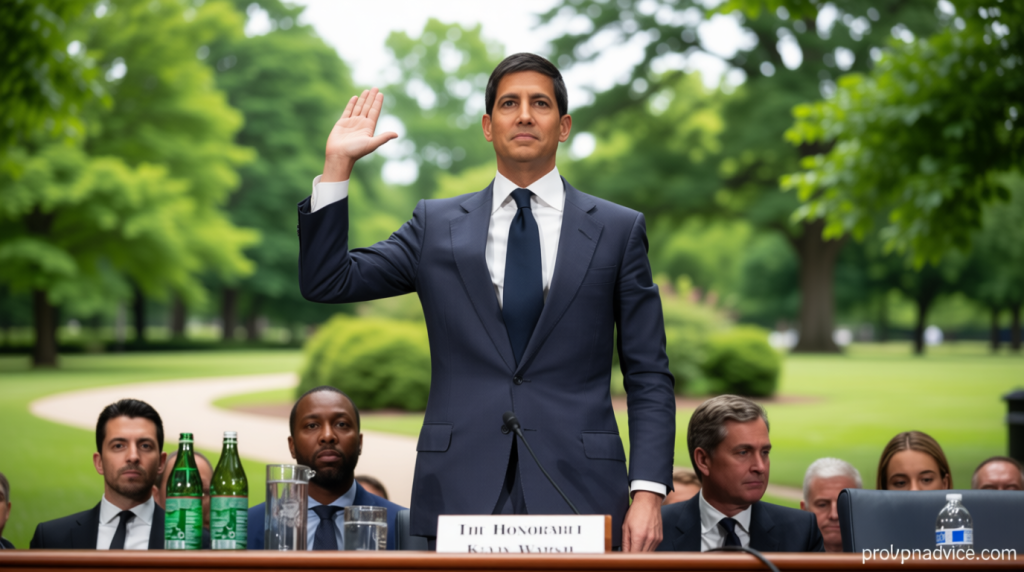
Kevin Warsh Confirmed as Fed Chair, Succeeding Jerome Powell
Kevin Warsh confirmed as Fed chair – On Wednesday, the U.S. Senate approved Kevin Warsh as the 17th chair of the Federal Reserve, marking a pivotal shift in the central bank’s leadership. The vote, which came down to 54-45, reflected deep political divisions, with most members aligning along party lines. Democratic Senator John Fetterman of Pennsylvania became the sole cross-party supporter, casting a deciding vote in favor of Warsh’s nomination. This outcome highlighted the growing unease among Democrats regarding the Trump administration’s campaign to challenge the Fed’s autonomy, while Republicans largely endorsed the choice as a continuation of their preferred economic direction.
Warsh’s ascension follows a period of intense scrutiny for the Federal Reserve under President Donald Trump, who has long criticized the institution for its monetary policies. The new chair inherits a central bank navigating a complex economic landscape, where inflation has surged due to global conflicts and energy price fluctuations. The April Consumer Price Index revealed a three-year peak in inflation, surpassing wage growth for the first time in months. This situation has complicated the prospect of rate cuts, which Trump has consistently advocated as a key tool to stimulate the economy.
While Warsh is widely seen as more sympathetic to Trump’s agenda, his tenure will be defined by the challenge of managing inflationary pressures. The U.S.-Israeli conflict with Iran has intensified geopolitical tensions, creating a volatile backdrop for monetary decisions. Analysts suggest that the Fed may now maintain its benchmark lending rate unchanged for the remainder of the year, or even consider raising it if inflation persists. Such a path is likely to test Trump’s patience, as the president previously hinted at legal action against Powell for not cutting rates.
Policy Shifts and Institutional Overhaul
Warsh’s leadership is anticipated to bring significant changes to the Fed’s operations. Among his proposed reforms is a reduction in the central bank’s $6.7 trillion balance sheet, a move he has advocated for years. This strategy would involve accelerating the sale of assets like mortgage-backed securities and government bonds, aiming to restore the Fed’s traditional reliance on interest rates to combat inflation and unemployment. The plan also includes closer coordination with the Treasury Department, a step that could streamline fiscal and monetary policies.
Other initiatives include decreasing the number of policy meetings from eight to four annually, cutting back on public communications, and shrinking the Fed’s Washington-based workforce. These adjustments are designed to enhance efficiency and reduce the central bank’s visibility in daily economic management. According to JPMorgan analysts, Warsh has the authority to implement these changes, as the chair’s role encompasses shaping the agenda while respecting the collective decisions of the Federal Open Market Committee.
The most contentious policy shift may involve the Fed’s balance sheet. Warsh has long argued that the central bank’s expansive asset purchases during the Great Financial Crisis and the pandemic—known as quantitative easing—undermine its independence by effectively subsidizing government spending. He believes that prioritizing rate adjustments over bond buying will allow the Fed to maintain its traditional role as a neutral arbiter of monetary policy.
Partisan Struggles and Political Challenges
The confirmation process was marked by a fierce battle, with Trump’s selection of Warsh facing delays due to Republican Senator Thom Tillis of North Carolina. Tillis demanded that the Justice Department drop an investigation into former Chair Jerome Powell, which had focused on testimony Powell gave to Congress about cost overruns in the renovation of the Fed’s headquarters in Washington, DC. The probe, led by U.S. Attorney Jeanine Pirro, raised concerns about potential political interference in the Fed’s operations, a theme that resonated with many Democrats during the hearings.
Trump’s choice of Warsh, a former Federal Reserve Governor and Wall Street economist, was seen as a strategic move to align the central bank with his economic priorities. However, the confirmation process underscored the administration’s broader efforts to influence the Fed’s independence. Powell had criticized the investigation as a politically motivated effort, stating in a video statement that it represented “threats and ongoing pressure” from the White House. Despite these concerns, the Senate ultimately moved forward with Warsh’s nomination, signaling a shift in the Fed’s direction under new leadership.
The confirmation hearing itself was a dramatic affair, with Warsh facing intense questioning about his views on inflation, rate cuts, and the Fed’s role in the economy. While he emphasized the need for monetary policy to prioritize price stability, critics argued that his approach might not address the broader structural issues facing the U.S. economy. The vote to confirm him, though narrow, marked the most partisan decision in the history of Fed chair appointments, highlighting the political stakes involved in central bank leadership.
Legacy and Future Implications
Warsh’s confirmation is expected to reshape the Fed’s institutional culture. His focus on reducing the balance sheet and streamlining operations could signal a departure from the expansive policies of recent years. However, his influence will be limited by the Federal Open Market Committee, which includes 12 policymakers with voting power. While Warsh will guide discussions at meetings, the final decisions will depend on the consensus of the group, which has shown signs of divergence over inflationary concerns.
Trump’s appointment of Warsh also reflects a broader pattern of leveraging the Fed to support his economic vision. The new chair’s emphasis on rate cuts and fiscal coordination with the Treasury could align with Trump’s goals of boosting growth and reducing borrowing costs for businesses. Yet, the ongoing inflationary pressures—driven by both global conflicts and domestic energy shocks—will test his ability to balance these priorities with the need for price stability.
As Warsh assumes the role, the Fed will enter a new era of leadership. His policies are likely to spark debate among economists and policymakers, with some praising his focus on traditional tools and others questioning his ability to navigate the complex challenges of the current economic climate. The central bank’s role in shaping the nation’s financial future will remain as critical as ever, even as its leadership becomes more closely tied to the political winds of the White House.
In the aftermath of the confirmation, the Fed’s commitment to independence will be a key battleground. Warsh’s approach to monetary policy, particularly his stance on the balance sheet, may redefine how the central bank operates in the coming years. While the Trump administration has sought to reshape the Fed’s priorities, the institution’s ultimate success will depend on its ability to adapt to both domestic and international economic forces.
The confirmation of Kevin Warsh as Fed chair represents a turning point in the central bank’s history. His leadership will be tested by the dual challenges of inflation and political expectations, with the potential to alter the Fed’s role in the global economy. As the new chair begins his tenure, the focus will shift to how effectively he can navigate these complexities while maintaining the Fed’s credibility as an independent institution.
“If he doesn’t cut rates, I’ll sue him,” Trump joked during the confirmation process, underscoring his frustration with the Fed’s reluctance to lower interest rates despite his campaign promises.
Warsh’s confirmation not only marks a leadership transition but also highlights the ongoing tension between monetary policy and political influence. His tenure will be a critical period for the Fed, as it seeks to balance its traditional mandate with the demands of a president who has long viewed the central bank as a target for economic reform.
