Iran MOU signals ‘major shift’ from military to economic, political objectives for Trump: Retired general

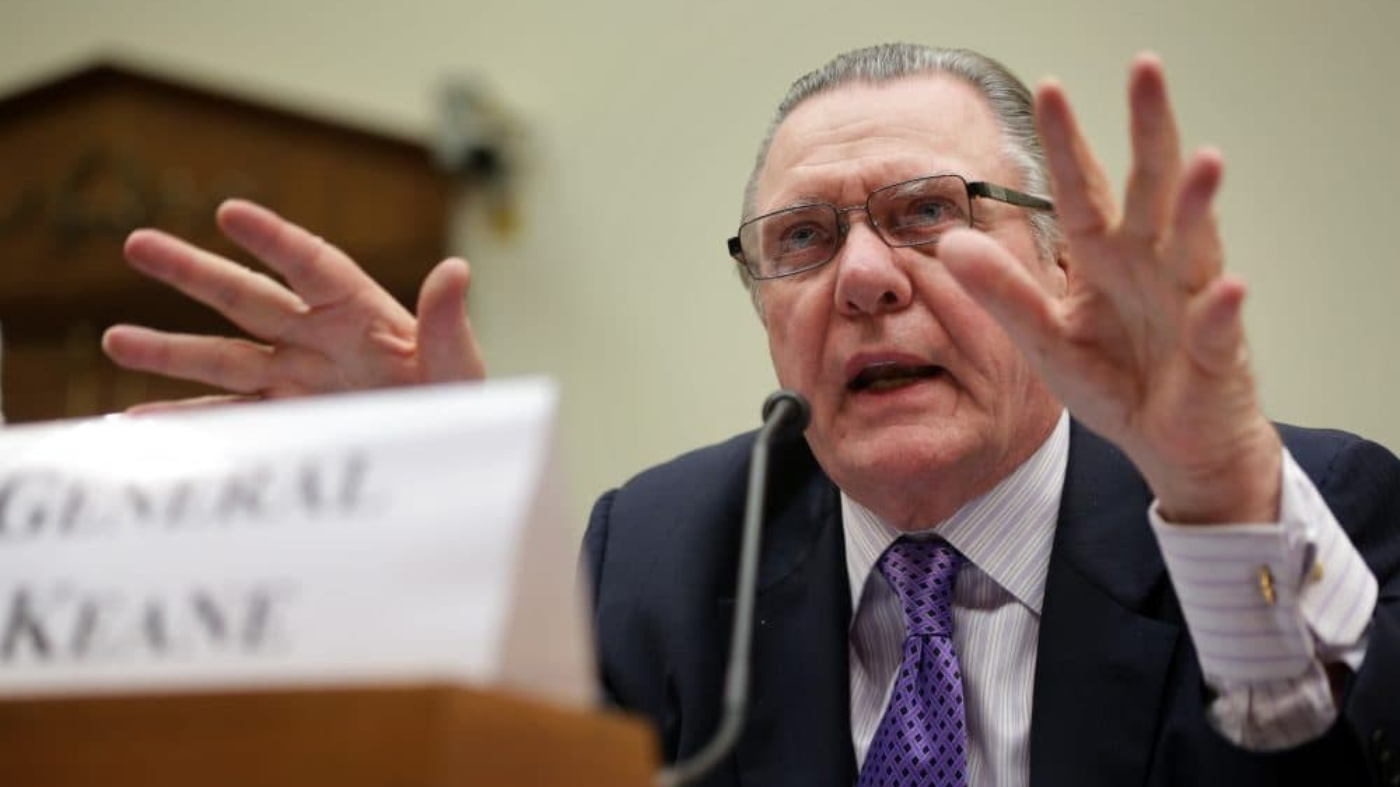
Retired General Jack Keane: US-Iran MOU Reflects Trump’s Strategic Shift Toward Economic and Political Goals
Provpnadvice.com – Retired Army General Jack Keane, in a recent interview, highlighted that the US-Iran memorandum of understanding (MOU) represents a significant departure from the Trump administration’s previous foreign policy approach in the Middle East. According to Keane, the agreement signals a broader realignment of priorities, shifting emphasis from military dominance to economic and political strategies aimed at reshaping Iran’s role in regional affairs.
Reassessing the Administration’s Strategic Focus
Keane spoke with hosts John Catsimatidis and Rita Cosby on the “Cats and Cosby Show” during a segment on WABC 770 AM. He explained that the Trump administration’s strategy has evolved, prioritizing economic and political engagement over traditional military interventions. “The administration has recognized a fundamental change in its objectives,” Keane stated. “Previously, the focus was on military operations, but now the emphasis is on economic and political outcomes in the Middle East.”
“The president’s advisers have pushed the idea that the rise in oil and gas prices following the closure of the Strait of Hormuz, along with Iran’s ability to retaliate effectively against Gulf states’ infrastructure, would trigger a worldwide economic crisis. This combination of factors has prompted the current negotiations,” Keane added.
Keane elaborated on the rationale behind the MOU, noting that the administration’s decision to prioritize economic and political goals stems from the potential consequences of continued military action. He emphasized that the closure of the Strait of Hormuz had already caused oil prices to spike, and Iran’s capacity to strike back at critical energy infrastructure could escalate the situation into a global depression. “By combining these two factors—the price increase and Iran’s retaliatory capability—the administration has opted for diplomacy to avoid a broader economic fallout,” he explained.
Uncertain Outlook for a Lasting Peace
In separate conversations, Keane has expressed skepticism about the prospects of a sustainable peace deal with Iran. He previously stated that renewed US combat operations against Tehran are “inevitable” if diplomatic efforts fail to meet American objectives. “The current MOU may be a step forward, but it doesn’t guarantee long-term stability,” Keane noted. “There are still major concerns about Iran’s continued influence and the terms of this agreement.”
Keane’s assessment mirrors the views of some lawmakers who have criticized the MOU as a concession that grants Iran more benefits than constraints. These critics argue that the deal allows Tehran to maintain its nuclear program while reducing sanctions, potentially emboldening its regional ambitions. However, Keane maintains that the Trump administration’s approach is pragmatic, focusing on achievable outcomes rather than idealistic goals.
Trump’s Commitment to Resolving the Iranian Issue
Keane asserted that President Trump would not leave the Iranian challenge unresolved for his successor, contrasting with how President Biden inherited the issue. “Trump is determined to fix this either through negotiations or military action,” Keane said. “He won’t pass it on as a legacy, even if the current MOU isn’t perfect.”
He stressed that Trump’s primary goal is to secure a deal that aligns with US interests, even if it requires further concessions. “If the president can’t reach a favorable agreement in time, he will take decisive action to cripple Iran’s military and economic power,” Keane warned. “This is not just about political leverage—it’s about ensuring Iran can’t threaten US interests in the region.”
“Despite the memorandum’s shortcomings, I believe Trump will not settle for a permanent agreement unless it fully satisfies his objectives. He has two more years in office and is not willing to let his successor deal with the consequences of his decisions. This is a clear indication of his resolve,” Keane concluded.
Keane’s remarks underscore the administration’s calculated approach to dealing with Iran. While the MOU is seen as a compromise, it reflects a strategic pivot toward economic pressure and political dialogue. He pointed out that Iran’s ability to retaliate against Gulf states’ energy infrastructure has made military conflict a riskier option, particularly given the potential for global economic disruption. “This is a shift in mindset,” Keane said. “The administration is now looking at the big picture, not just immediate tactical victories.”
Further, Keane suggested that the MOU might serve as a temporary solution, allowing the Trump administration to manage the situation while keeping its long-term goals in view. “It’s a bridge to a more permanent agreement, but it’s also a tool to keep Iran’s options limited,” he explained. “The real test will be whether the deal can withstand scrutiny and meet all of Trump’s key demands.”
The MOU has sparked debate among experts and policymakers, with some praising its potential to reduce tensions and others questioning its effectiveness. Keane acknowledged the challenges but remained confident in Trump’s ability to push for a stronger outcome. “The president has the flexibility and resolve to choose the path that best serves American interests,” he stated. “Whether that’s through diplomacy or military force, he’s prepared to take action.”
Implications for US-Iran Relations
Analysts suggest that the MOU could mark a turning point in US-Iran relations, moving the focus from confrontational military tactics to a more cooperative framework. However, Keane cautioned that the deal’s success depends on Iran’s willingness to comply with the terms and the administration’s ability to enforce them. “This isn’t a permanent victory, but it’s a necessary step to avoid a more devastating conflict,” he said.
He also highlighted the importance of maintaining economic leverage, arguing that the administration’s ability to control oil prices and sanctions will be critical in shaping Iran’s behavior. “The MOU is just the beginning. The real battle is in ensuring Iran remains under pressure and doesn’t regain its footing,” Keane emphasized. “Trump is not only focused on the immediate outcomes but also on the long-term stability of the region.”
As the negotiations progress, Keane’s analysis serves as a reminder of the administration’s strategic priorities. His perspective adds to the broader discussion about the balance between military strength and diplomatic engagement. “The president is looking for a solution that works for both the US and the Gulf states, without compromising his core goals,” he said. “This is a defining moment in his foreign policy.”
With the Trump administration still in control of key decisions, the MOU’s fate remains tied to the president’s ability to negotiate effectively. Keane’s comments reinforce the idea that the administration is willing to adapt its approach, even as it remains committed to containing Iran’s influence. “This shift shows a growing understanding of the interconnected nature of global politics,” he noted. “It’s not just about winning wars anymore—it’s about securing economic and political stability.”
Ultimately, the memorandum of understanding represents a complex blend of diplomacy and strategic calculation. While it signals a change in direction, its long-term impact will depend on how well it aligns with Trump’s vision for the Middle East and Iran’s response to the new terms. As Keane pointed out, the president is ready to take whatever steps are needed to ensure his objectives are met, whether through negotiation or decisive military action.