Senate fumes as Clayton chaos unwinds path to renew FISA

Senate Expresses Frustration as Uncertainty Over Jay Clayton’s Confirmation Disrupts FISA Reauthorization Efforts
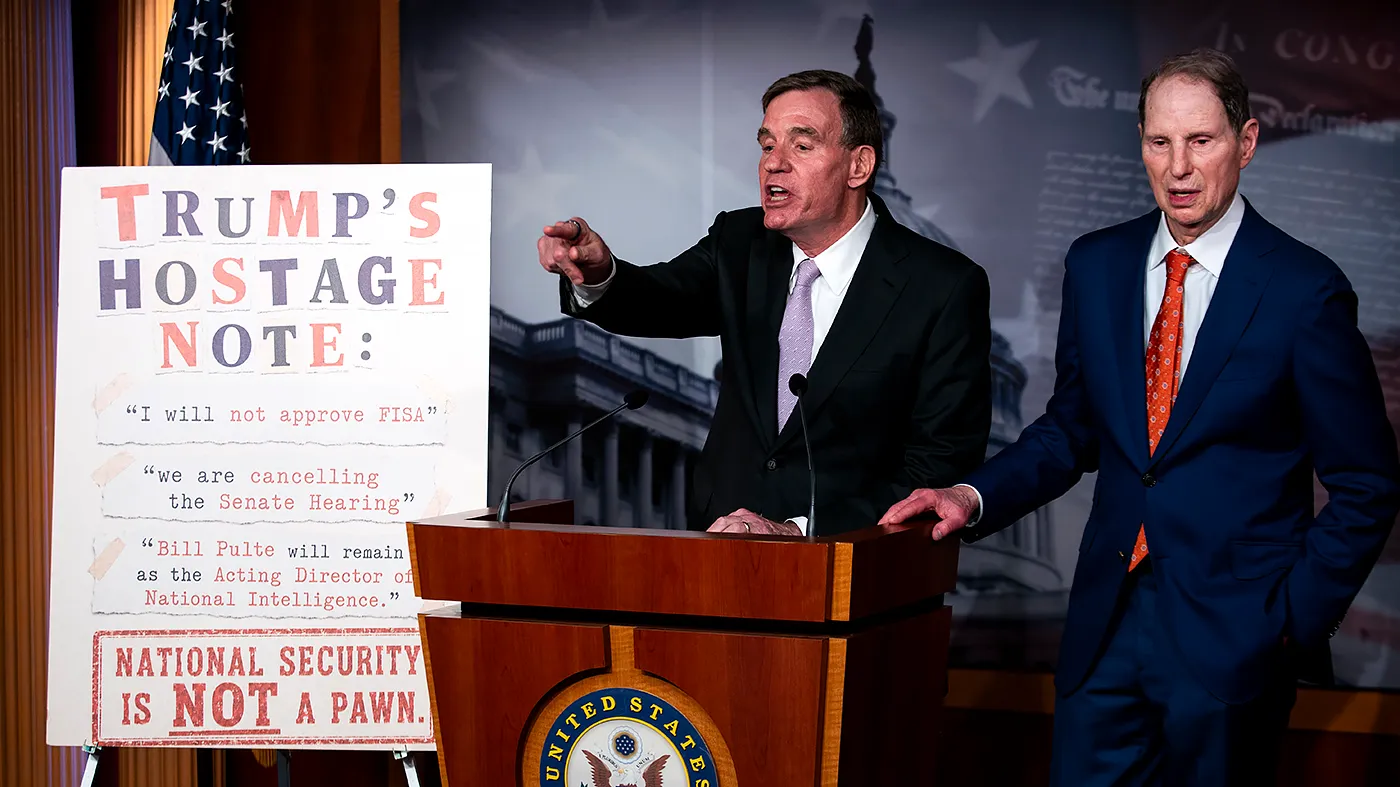
Provpnadvice.com – The Senate has found itself in a state of disarray as President Trump’s actions continue to complicate the process of reauthorizing the nation’s critical surveillance authority under the Foreign Intelligence Surveillance Act (FISA). At the center of the turmoil is the nomination of Jay Clayton, Trump’s chosen director of national intelligence (DNI), whose confirmation has become a flashpoint for partisan discord. The confusion stems from Trump’s abrupt cancellation of a Senate hearing, a move that has left lawmakers scrambling to determine the next steps in both appointing a leader for the intelligence community and restoring the expired FISA 702 provisions.
Conflicting Statements Spark Senate Confusion
Senate Intelligence Committee Chair Tom Cotton (R-Ark.), a staunch ally of the president, initially resisted Trump’s decision, asserting that the hearing would proceed as planned. However, Cotton later reversed his stance, announcing that Trump had instructed the nominee not to appear, calling the cancellation a “regrettable” setback. This back-and-forth has left many senators unsure whether the process is derailed or merely delayed.
“I am not sure whether Jay Clayton has simply been postponed or withdrawn. I wonder whether Jay Clayton knows whether he has been postponed or withdrawn,” said Sen. Mark Warner (D-Va.), the top Democrat on the Intelligence panel. His remarks highlighted the growing frustration within the Senate as the administration’s actions cast doubt on the reliability of the nomination process.
Meanwhile, the confusion has extended beyond the hearing itself. Trump’s decision to cancel the session has created a ripple effect, with lawmakers questioning the administration’s ability to coordinate a coherent strategy. The delay in confirming Clayton has become a sticking point for reauthorizing FISA 702, which Democrats argue is essential for maintaining the nation’s surveillance capabilities.
Trump’s Condition for FISA Renewal
Adding to the uncertainty, Trump tied the renewal of FISA 702 to his own legislative agenda, insisting that the SAVE America Act must be attached to any reauthorization bill. The president’s early morning announcement—made just before 4 a.m. EDT—has left senators unsure of how to proceed. “I was enthusiastic,” said Sen. Todd Young (R-Ind.), a member of the Senate Intelligence Committee. “I visited with Jay. I think he is highly qualified. I commend the president on the nomination, and I regret that his confirmation is going to be delayed, apparently. But it is what it is. This is the president’s prerogative.”
Young’s comments underscore the political stakes at play. The president’s refusal to approve the spy provisions without his preferred bill has forced the Senate into a holding pattern, with neither side able to advance their priorities. This situation has left the intelligence community in limbo, as the nomination of a permanent leader remains unresolved.
A Political Miscalculation?
Sen. Kevin Cramer (R-N.D.) questioned whether Trump’s decision to cancel the hearing reflected a broader strategy of political maneuvering. “One of the things may very well be, as I try to explain it in my own brain, sort of maybe a lack of trust or faith in [Senate Majority Leader] John Thune’s clear-eyed understanding of the sequence of things that have to happen,” Cramer explained. “The sequence being the nomination of Jay Clayton, the fast tracking of his confirmation to avoid Bill Pulte from even having a minute as the acting [director of national intelligence], resulting then in Democrats going back to their roots, which would be to support FISA 702 reauthorization.”
Cramer’s analysis points to the administration’s attempt to reassert control over the nomination process. By delaying Clayton’s confirmation, Trump sought to prevent Bill Pulte, the head of the Department of Housing and Urban Development, from assuming the acting DNI role. Pulte, known for his aggressive pursuit of mortgage fraud cases involving Trump allies, had become a symbol of Democratic opposition to the reauthorization. However, Trump’s maneuvering has now created a new obstacle, with the Senate struggling to find a path forward.
Democrats Criticize the Administration’s Approach
The Democrats have accused the Trump administration of undermining the legislative process, framing the situation as a deliberate attempt to stall FISA renewal. “Now it’s up to the White House to figure out a path forward,” said Sen. Mark Kelly (D-Ariz.), who pointed to the administration’s role in creating the current impasse. “Here we had a path forward as of yesterday, and today we don’t, and that’s because of this president and his advisers.”
Senate Minority Leader Chuck Schumer (D-N.Y.) echoed similar sentiments, describing the situation as a result of internal Republican discord. “This is a Republican president, Republican House, Republican Senate, all screwing up with each other,” he remarked. “They’ve got to come to an agreement, and they’ve got to have the co”
The expiration of FISA 702 has already raised concerns about the nation’s ability to conduct surveillance on foreign targets. With the intelligence community’s leadership in question, the Senate faces a daunting task in reauthorizing the program. The ongoing debate highlights the delicate balance between national security needs and partisan politics, with both sides blaming each other for the stalemate.
Broader Implications for National Security
FISA 702, which allows the government to collect foreign intelligence from overseas, has been a cornerstone of U.S. surveillance policy. Its lapsed status means that the ability to monitor international communications, including those of foreign adversaries, is now in jeopardy. The Senate’s inability to confirm a DNI has further complicated matters, leaving the intelligence community without a clear direction.
Senators on both sides of the aisle have expressed dismay over the lack of clarity. “There is uncertainty that needs to be resolved by the administration working with Congress,” Young added, emphasizing the need for collaboration. The situation has exposed the fragility of the legislative process, with Trump’s actions forcing lawmakers to reassess their approach to reauthorization.
As the debate continues, the focus remains on whether the Senate can overcome its internal divisions and secure the renewal of FISA 702. The nomination of Jay Clayton, once a potential solution, now appears to be a source of further complications. With the nation’s surveillance tools expiring and the intelligence community in limbo, the stakes have never been higher for a resolution that balances political ambitions with national security requirements.