Todd Blanche faces rocky Senate confirmation process for attorney general

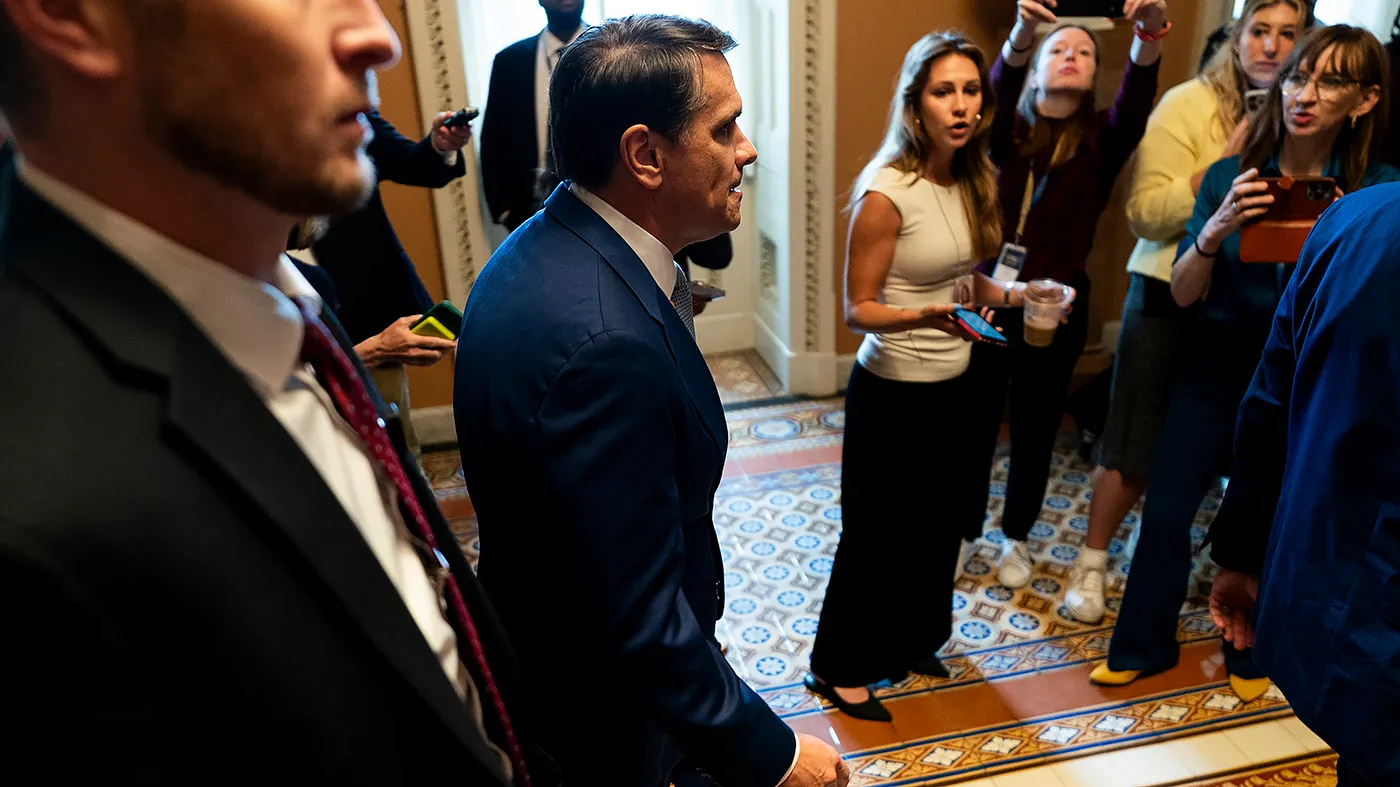
Todd Blanche faces challenging Senate confirmation process for attorney general
Provpnadvice.com – Acting Attorney General Todd Blanche is set to undergo a difficult Senate confirmation process as several Republican senators question his reliability and allegiance to President Trump. The debate centers on whether Blanche can demonstrate sufficient independence to lead the Justice Department without being swayed by the administration’s agenda.
Republican Concerns Emerge During Private Meetings
During a recent private session with GOP lawmakers, Blanche came under sharp scrutiny. Over 20 Republican senators expressed frustration with the administration and criticized his proposal for a $1.8 billion fund designed to counteract what they called “weaponization” of the Department of Justice. The senators argued that the fund could be used to shield the president from accountability, raising doubts about Blanche’s commitment to impartiality.
Blanche, however, has since clarified his stance. In two separate private meetings with Republican senators, he stated that the fund is no longer a priority and promised not to endorse it if President Trump attempts to revive the idea later. This reassurance has not fully dispelled skepticism, as questions remain about his alignment with the administration’s broader objectives.
Key Issues Highlighted by Senators
One of the most contentious topics during the meetings was an agreement between Trump and the IRS to limit audits of his past tax returns. Senator John Cornyn (R-Texas), a senior member of the Senate Judiciary Committee, emphasized that while Blanche provided some clarity on the deal’s scope, the core issue of immunity from future investigations remains unresolved. “There’s still confusion about whether the agreement applies prospectively or covers other government inquiries,” Cornyn noted.
“I think a lot of it will depend on how he performs at the Judiciary Committee. If he can get a strong vote coming out of the committee, then my expectation is we would be able to process him on the floor, but you’ve got a couple of people on that committee that you’ll have to convince,” Cornyn added.
Cornyn has voiced hesitancy about supporting Blanche until he testifies before the full committee. His remarks suggest that the senator is still evaluating Blanche’s credibility, particularly in light of past statements about the “anti-weaponization” fund. Other lawmakers have echoed similar concerns, highlighting the need for Blanche to address potential conflicts of interest.
Committee Votes and Political Dynamics
Blanche’s confirmation hinges on securing the backing of all 14 Republican senators on the Judiciary Committee. Cornyn and Thom Tillis (R-N.C.) are among the key figures monitoring his performance. Tillis, who has openly criticized Trump’s policies since announcing his retirement last year, has been particularly vocal about the fund. He demands guarantees that the $1.8 billion initiative will not be reinstated, even referencing it as the “1.776 turkey” in a metaphorical expression.
“I still want that 1.776 turkey dead with a stake in it,” Tillis said, underscoring his desire for definitive assurances that the administration will not attempt to rekindle the fund. He argued that any ambiguity in the agreement could lead to payouts for individuals involved in the Jan. 6 Capitol riot, casting doubt on Blanche’s independence.
John Kennedy (R-La.), another member of the Judiciary Committee, added that Blanche’s past remarks about the fund have damaged his reputation. “His credibility is on the line,” Kennedy said, urging Blanche to thoroughly answer Cornyn’s questions about the tax audit immunity. Kennedy acknowledged Blanche’s qualifications but stressed the importance of transparency, especially regarding the president’s potential influence over the Justice Department.
“If I were the nominee, I’d listen to Sen. Cornyn because he might vote no if he doesn’t get a satisfactory answer,” Kennedy remarked.
Uncertainty and Strategic Challenges
Despite Blanche’s assurances, the confirmation process remains uncertain. Senate Majority Leader John Thune (R-S.D.) acknowledged that the outcome depends on Blanche’s ability to navigate the committee’s scrutiny. “We’ll see,” Thune said, indicating that no definitive conclusion can be drawn yet.
Thune highlighted that Blanche must clear multiple hurdles before reaching the Senate floor. The committee’s vote is critical, as it sets the stage for broader debate. However, with some senators already skeptical, the path to confirmation may be fraught. Cornyn’s and Tillis’s cautious approach signals that Blanche’s support is not guaranteed, even among Republicans.
Blanche’s position as a Trump loyalist has also drawn criticism. While he has denied backing the fund, senators are wary of his past actions. For example, his initial proposal for the $1.8 billion initiative was seen as a step toward shielding the administration from accountability. This perceived alignment with Trump has made it harder for Blanche to convince all Republicans of his neutrality.
The debate over the IRS agreement is further complicated by the possibility of future audits. Cornyn pointed out that the deal’s terms are unclear, leaving room for interpretation. “There’s a lot of confusion about whether it’s prospective, whether it includes things other than just taxes and maybe other government investigations,” he explained. This ambiguity has fueled concerns that Blanche may prioritize Trump’s interests over the rule of law.
Meanwhile, Tillis has framed the issue as a test of loyalty. He argued that the fund’s existence could allow the administration to settle claims related to the Jan. 6 riot without facing full scrutiny. “That’s got to be done by the time the confirmation vote occurs,” Tillis said, stressing the importance of finalizing the agreement before the final decision.
Political Context and Confirmation Timeline
The Senate’s confirmation process is often a reflection of broader political tensions. Blanche’s appointment is not just about his qualifications but also about his perceived role in the Trump administration. As the leader of the Justice Department, he would be responsible for enforcing federal laws, including those related to the president’s legal challenges.
With the confirmation hearings looming, Blanche faces a critical opportunity to prove his independence. The senators’ questions are not merely about policy but also about whether he can maintain impartiality in the face of political pressure. Cornyn’s comments suggest that even within the Republican ranks, there is a divide over how much support Blanche can expect.
Blanche’s journey to the Senate floor will be a test of his ability to balance loyalty with objectivity. The outcome of his confirmation could have lasting implications for the Justice Department’s role in holding the executive branch accountable. As the process unfolds, the spotlight remains on Blanche to demonstrate that he is more than just a figurehead for Trump’s agenda.
Ultimately, the success of Blanche’s confirmation depends on his capacity to address the senators’ concerns effectively. Whether he can convince them of his independence will determine his fate in the Senate. The hearings are expected to draw intense scrutiny, with each question aimed at uncovering potential conflicts of interest.
As the confirmation process progresses, the political stakes continue to rise. Blanche’s ability to navigate these challenges will be key to his future in the federal government. The senators’ mixed signals and lingering doubts highlight the complexity of the situation, ensuring that the confirmation vote will be a closely watched event in Washington.