
US vs. Iran: Three generations of conflict
US vs. Iran: Three generations of conflict
The 1953 Coup
The rivalry between the United States and Iran has evolved across multiple decades, shaped by pivotal events that continue to fuel tensions. The recent US-Israel conflict with Iran, which began on February 28, didn’t emerge without prior tensions. In the early 20th century, the two nations shared a strategic alliance, with Washington viewing Tehran as a crucial partner in the fight against Soviet influence.
However, this dynamic shifted dramatically in 1951 when Iran’s prime minister, Mohammad Mossadegh, took control of the country’s oil industry, challenging Western dominance. Two years later, the CIA and MI6 orchestrated a coup to restore the shah’s power, a move described by Ian Lesser, vice president at the German Marshall Fund, as “a turning point in which the United States and Britain essentially engineered the overthrow of Mossadegh and the reinstatement of the shah.”
“My parents’ generation thought the problems the country had were because of the US intervention. They saw the shah as a puppet of the US,” said Negin Shiraghei, founder of the Azadi Network.
The coup sparked lasting resentment in Iranian society, with many perceiving it as a betrayal of democratic ideals. This sentiment laid the groundwork for the Islamic Revolution, which would follow three decades later.
The Hostage Crisis
By the late 1970s, public discontent with the shah’s regime had intensified. The United States, seen as a key supporter of his rule, faced growing opposition as Iranians rallied behind the revolutionary ideals of Ayatollah Ruhollah Khomeini. The 1979-81 hostage crisis became a defining moment in this relationship.
On November 4, 1979, a group of students aligned with Khomeini’s vision seized the US Embassy in Tehran, demanding the return of the shah from exile. The 66 hostages were held for 444 days, an ordeal that left a profound mark on American public sentiment. The event was portrayed as an attack on US sovereignty and a symbol of humiliation.
“That perception about Iran as an adversary is very much embedded in certain generations,” remarked Lesser, highlighting how the crisis influenced policymakers in Washington.
The Nuclear Dispute
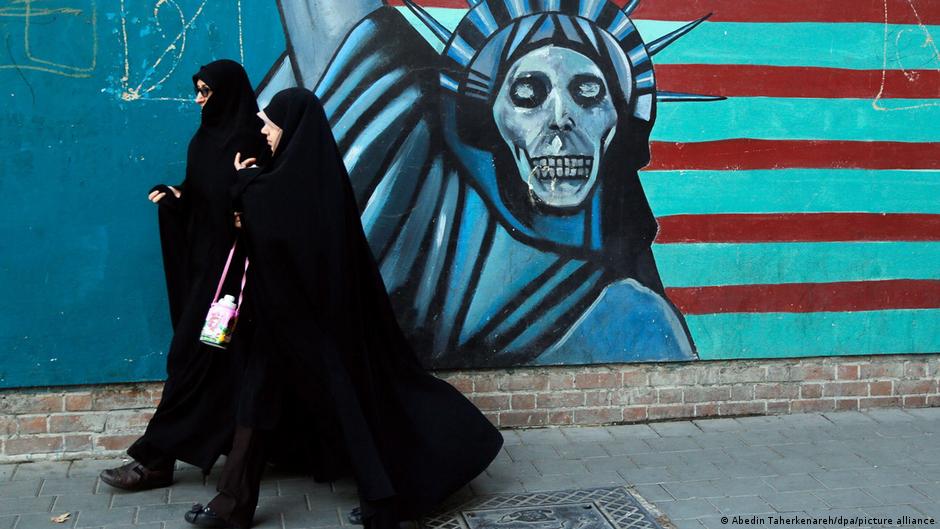
Following the revolution, anti-American sentiment in Iran remained strong, though it began to wane among younger generations. Iranians born in the 1990s and early 2000s experienced a period of political liberalization, which tempered some of the revolutionary fervor.
Despite this shift, the legacy of the 1979 revolution endures, particularly through the Islamic Revolutionary Guard Corps (IRGC). This institution, created to safeguard the revolution and quell dissent, continues to shape Iran’s confrontational stance toward the United States. The ongoing nuclear dispute is the latest chapter in this long-standing conflict.
The US and Iran’s mutual distrust is rooted in these historical events, which have left deep scars on both nations’ collective memory. From the 1953 coup to the Beirut barracks bombings, each episode has reinforced the perception of the other as an existential threat.
