
Who is Mojtaba Khamenei, Iran’s new supreme leader?
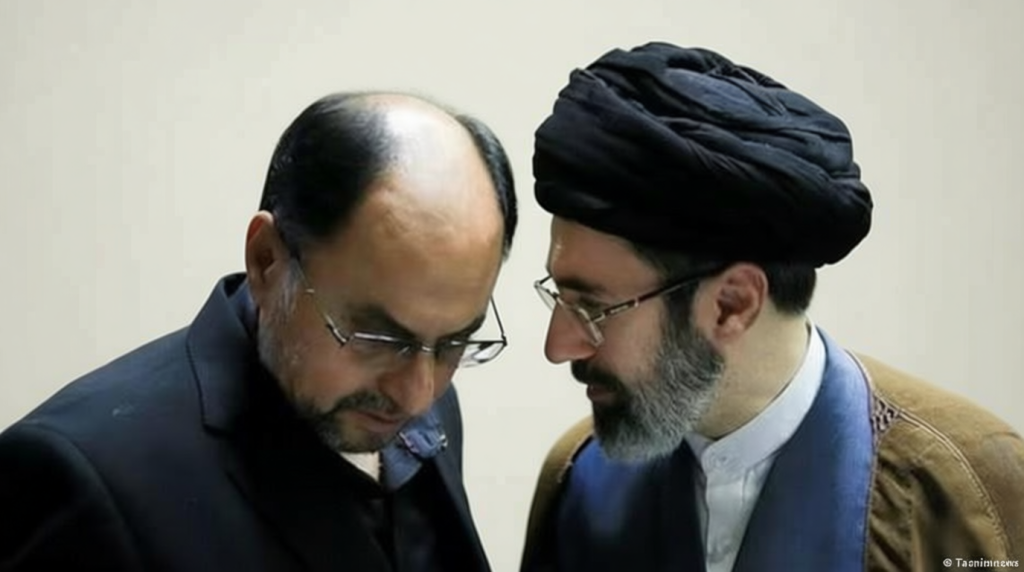
Who is Mojtaba Khamenei, Iran’s new supreme leader?
The Iranian Assembly of Experts has selected Mojtaba Khamenei as the nation’s latest supreme leader. This decision signals the continuation of a hardline policy, as the country remains engaged in conflict with the United States and Israel. Mojtaba, the son of the late Ali Khamenei, was chosen just over a week after the war with Washington and Tel Aviv intensified.
Mojtaba Khamenei was born on September 8, 1969, in Mashhad, making him the second child of the former supreme leader, Ali Khamenei, who perished in an Israeli airstrike on February 28. The 88-member assembly, which holds the authority to elect Iran’s supreme leader, announced his selection on March 8. Despite his youth, Mojtaba is regarded as a pivotal figure within the regime’s inner circles.
Early Life and Political Foundations
Before entering politics, Mojtaba attended Alavi School for secondary education and later studied at the Qom seminary. His early years were shaped by his father’s rise against Shah Mohammad Reza Pahlavi, a legacy that influenced his own trajectory. He spent seven years in Sardasht and Mahabad, where he received foundational schooling.
Following high school, Mojtaba joined the Islamic Revolutionary Guard Corps (IRGC) in 1987. His close relationships with IRGC commanders, many of whom had fought in the Iran-Iraq War (1980–1988), hinted at his political acumen. By the mid-1990s, officials began recognizing his growing influence in the political landscape.
2005 Elections and Alleged Interference
The 2005 presidential election marked Mojtaba’s first major political move. Analysts believe he played a critical role in securing the victory of Mahmoud Ahmadinejad, an IRGC-backed candidate, over former president Akbar Hashemi Rafsanjani. Rafsanjani, though politically weakened, did not publicly challenge the outcome.
Four years later, Mojtaba faced renewed scrutiny when Ahmadinejad’s re-election triggered widespread protests. Demonstrators, opposing his succession, chanted “death to Mojtaba” during the demonstrations. Reports emerged suggesting his involvement in quelling the so-called Green Movement, a key step in consolidating the regime’s power.
Financial Ties and International Criticism
A 2026 Bloomberg investigation revealed Mojtaba’s extensive financial holdings, including real estate in London and Dubai, as well as stakes in European shipping, banking, and hospitality sectors. These assets, however, are structured through intermediaries and complex corporate entities, obscuring their true ownership.
“They are wasting their time. Khamenei’s son is a lightweight,” said Axios, quoting former President Donald Trump.
Israel’s defense minister warned that Mojtaba’s selection would make him a “target for elimination.” While he has never held public office, Mojtaba’s influence is said to extend across Iran’s economic institutions, with at least 60% of the economy managed by holding companies under his father’s control. His role in overseeing these operations has raised questions about his financial dealings.
State media portrays Mojtaba as a man of modest lifestyle, emphasizing his religious background. His education in Qom, where he studied under influential clerics, further solidified his position within the Islamic establishment. Despite his low profile, his strategic alliances and quiet maneuvering have kept him central to Iran’s political machinery.
