Mamdani bans AI use in NYC elementary, middle schools amid tech industry skepticism

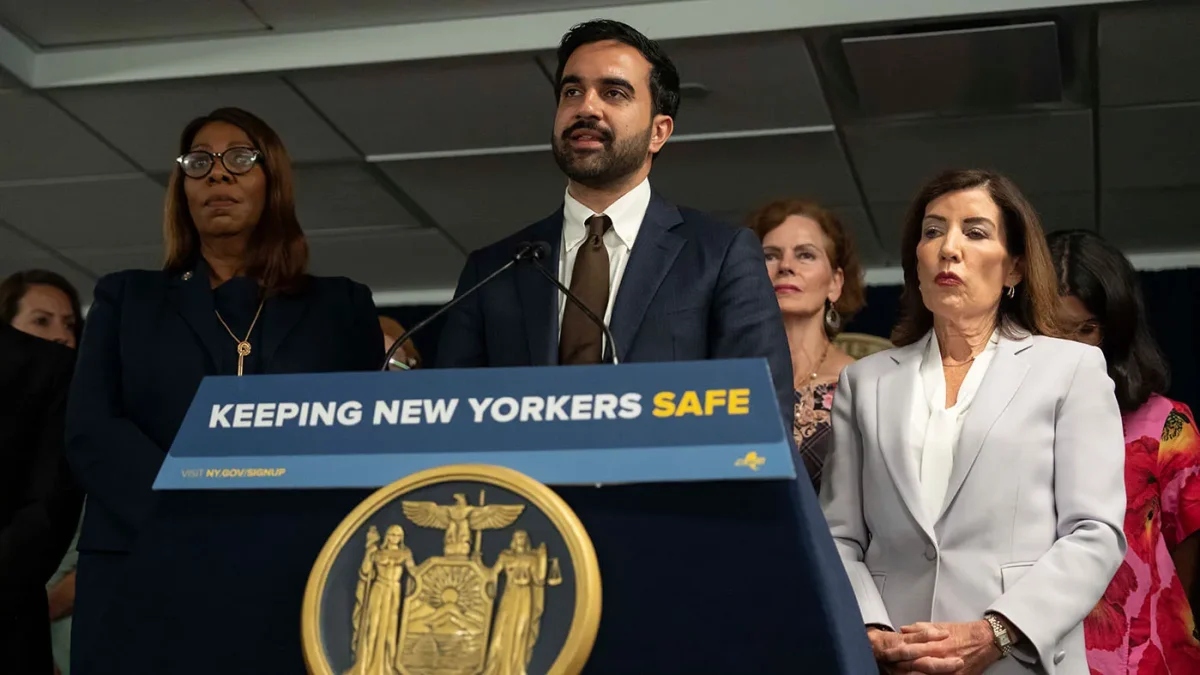
Table of Contents
NYC Mayor Imposes Year-Long Generative AI Ban on Elementary and Middle School Classrooms
Provpnadvice.com – With students set to return to their desks in just days, New York City Mayor Zohran Mamdani (D) announced a sweeping one-year moratorium on the use of generative artificial intelligence in public school classrooms serving children from age two through the final year of middle school. The directive, effective for the 2026–27 academic year running from September 10 through June 28, marks one of the most explicit municipal-level restrictions on AI in K-8 education in the United States and positions the city squarely against the prevailing industry narrative that AI integration in early learning is both unavoidable and essential.
Scope of the Prohibition and High School Provisions
The ban reaches from the earliest pre-kindergarten settings — programs serving two-year-olds — all the way through eighth grade. Within that span, no generative AI tool may be deployed in instructional activities, and the use of AI chatbots is prohibited across every grade level in the city’s public school system.
For public high school students, the policy carves out a narrow exception. Each high school may designate no more than five classrooms for participation in AI pilot platforms, and those sessions must occur under the direct supervision of a teacher. Students granted access to the pilot tools may use them for a maximum of 45 minutes per week. Separately, every NYC public high schooler will be required to complete two courses focused on AI critical thinking during the 2026–27 year, giving older students structured exposure to the technology’s capabilities and limitations without embedding it into daily instruction.
Mamdani’s Rationale: Human Connection Over Machine Mediation
Speaking at a press conference on Wednesday, the mayor framed the decision as a defense of the relational core of schooling. He argued that young learners depend on face-to-face interaction with teachers and peers to develop cognitively, socially, and emotionally.
“They need to develop skills alongside their peers, build relationships with their teachers and wrestle with tough problems on their own.”
Mamdani pushed back directly against the technology sector’s framing of the issue, rejecting the premise that early-education AI adoption is a foregone conclusion.
“The tech industry wants us to believe that AI in early education is not only inevitable, but that it is necessary. We do not see it that way.”
At the same time, the mayor stopped short of dismissing the technology entirely. He acknowledged that the world outside the classroom is already saturated with AI systems and that shielding students from all exposure would be unrealistic.
“We cannot pretend that that world does not exist. It would be irresponsible to not prepare our children for the fast-evolving technological future that lies ahead.”
He was equally firm on the boundary between supplementation and replacement:
“In no way, shape or form will AI replace student-teacher interaction. It is the foundation of our students’ educational experience. That will not change.”
IBM Survey: Adoption Outrunning Preparedness
The announcement coincided with the release of a Wednesday survey by IBM examining how AI is actually being used in K-12 settings across the country. The findings underscore the tension Mamdani’s policy seeks to manage. According to the study, 45 percent of elementary school teachers, 76 percent of middle school teachers, and 73 percent of high school educators reported incorporating AI into their classrooms at least once a week. Yet only two in ten K-12 educators said they had received extensive training in AI literacy, and just 20 percent of surveyed parents indicated they clearly understood the AI guidance their children were receiving at school.
The gap between rapid classroom adoption and institutional readiness gives practical weight to the mayor’s argument that unstructured, unsupervised exposure — particularly for younger children — may outpace the scaffolding schools need to make such exposure pedagogically sound.
Broader Context and Political Reaction
The decision lands amid a widening split between municipal education authorities and the technology industry over the pace and depth of AI integration in schools. Several districts have moved to ban or restrict AI tools for younger students, while others have embraced pilot programs with vendor partnerships. Mamdani’s moratorium is notable both for its breadth — covering the entire K-8 pipeline in a single administrative action — and for its pairing of restriction with structured high-school instruction, signaling an attempt to delay exposure without eliminating it altogether.
New York Governor Kathy Hochul (D) endorsed the measure, describing the mayor as advancing a shared commitment to supporting the state’s children. In language carried in the mayor’s office release, Hochul characterized the moratorium as pushing forward a collective obligation to protect young learners while they navigate an increasingly automated information environment.
The one-year timeframe built into the policy suggests the administration views the ban as provisional rather than permanent — a window during which the city can evaluate pilot outcomes in high school classrooms, refine its two-course critical-thinking curriculum, and reassess whether conditions warrant a longer-term restriction or a phased reintroduction of AI tools into lower grades. For the roughly 1.1 million students enrolled in NYC public schools, the immediate effect is straightforward: their classrooms will operate without generative AI for the coming academic year, and their teachers will be expected to rely on human instruction, peer collaboration, and supervised problem-solving as the primary engines of learning.
Related Reading
Frequently Asked Questions
What is Mamdani bans AI use in NYC elementary?
Mamdani bans AI use in NYC elementary is the main topic of this guide. The article explains the context, practical details, and next steps readers should understand.
Why does Mamdani bans AI use in NYC elementary matter?
Mamdani bans AI use in NYC elementary matters because readers are looking for a useful answer, not just a short summary. Good content should match search intent and help them decide what to do next.