Trump boosts Paxton amid GOP worries over Texas Senate flip

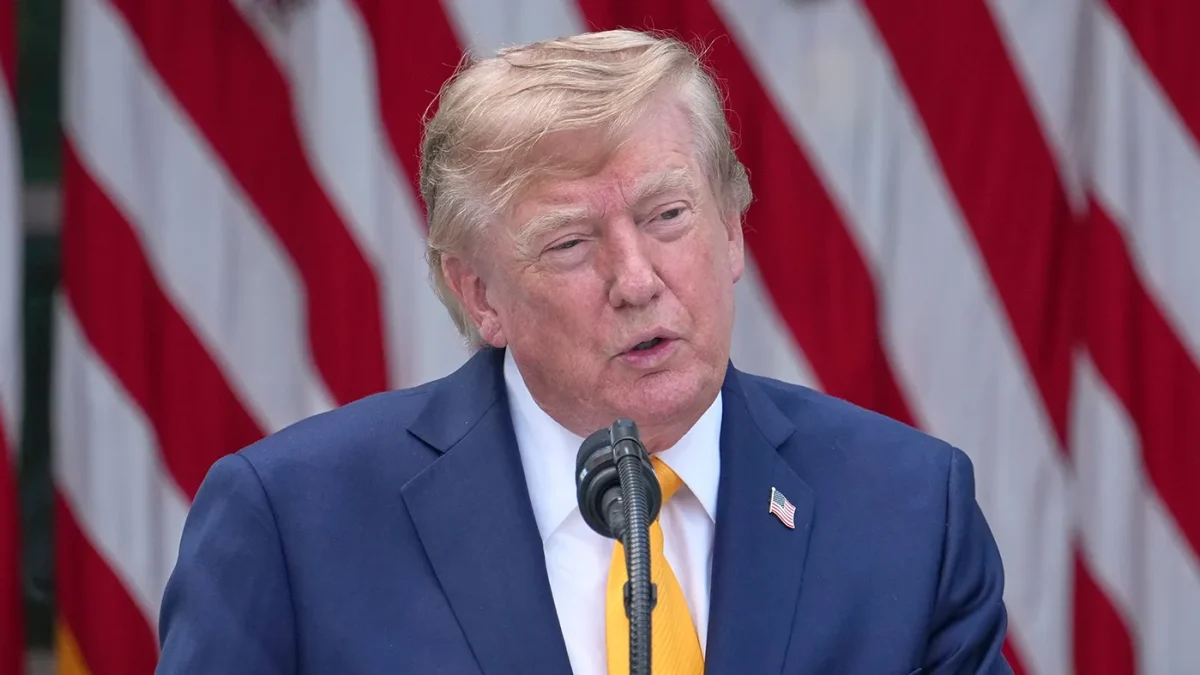
Table of Contents
Texas Senate Race Becomes Most Expensive Contest in GOP Midterm Portfolio
Provpnadvice.com – The Lone Star State has surged to the center of Republican midterm strategy, drawing presidential attention and enormous financial commitments as Democrats close in on a Senate seat long considered safe for the party. What began as a predictable incumbent reelection has transformed into a genuine coin-flip, forcing the GOP to pour resources into a state whose sheer geographic scale and media-market density make every advertising dollar more costly than in smaller battlegrounds.
President Trump announced his intention to campaign personally for Attorney General Ken Paxton (R), the party’s Senate nominee, during a visit to Texas. The move underscores how much oxygen the state now commands in a party already stretched thin across multiple competitive contests in Ohio, Michigan, and Maine.
“I’m going to help Ken Paxton. I’m going to spend a lot of time in Texas,” Trump told reporters in the Oval Office earlier Thursday.
A Toss-Up That Did Not Exist Six Months Ago
The nonpartisan Cook Political Report moved the Texas Senate race into toss-up territory last week, a shift that crystallized anxieties within the party about whether its November majority can survive. Texas has functioned as a Republican anchor state for decades; the prospect of a Democratic flip now looms large enough to reshape national spending priorities.
AdImpact, a political advertising tracker, projected in a June report that roughly $446 million would be spent on political advertising in the state alone — a dramatic upward revision from its earlier estimate of $124 million. The figure reflects both the competitive pressure from Democrat MJ Talarico and the structural cost of reaching voters across Texas’s sprawling media markets.
“A competitive Texas is a very expensive date for us,” said Dan Eberhart, a Republican donor backing the Paxton campaign.
“Trump is stepping up to help Paxton, but one fundraiser isn’t going to be enough,” Eberhart added.
The Primary’s Aftermath and Its Financial Scar
This year’s contest carries a complication absent from most Senate races: a bruising intra-party primary in which Paxton defeated incumbent Senator John Cornyn (R-Texas). The two campaigns collectively burned through $135 million in that intraparty fight, depleting donor goodwill and leaving both operations with exhausted networks heading into the general election.
Cornyn’s allies had warned before the primary that Paxton was the weaker general-election candidate and that his nomination would siphon resources away from Texas in November. Brendan Steinhauser, a Texas-based Republican strategist who managed Cornyn’s 2014 reelection effort, acknowledged the competitive pressure while arguing the race would have remained winnable under either nominee.
“It’s competitive, and so I think you’ll see a lot more money be raised here and spent here as opposed to being raised and sent to places like Ohio, Michigan, and Maine,” Steinhauser said.
“I think that Cornyn probably would be a few points ahead of where Paxton is, but I don’t think he would be that far ahead,” he added, pointing to the tightening gubernatorial race as evidence of broader Democratic momentum in the state.
Polling Shows a Tight Race
A University of Texas/Texas Policy Project poll released this week found Talarico ahead of Paxton 42 percent to 39 percent, within a margin of error of plus or minus 2.83 percent. An additional 14 percent of respondents said they had not yet formed an opinion on the race, leaving a substantial undecided bloc that either candidate could still convert.
Fundraising Dynamics and the War Chest
Despite early doubts about Paxton’s ability to raise money after the primary drain, national operatives report that his second-quarter haul of $9 million (April through June) has eased those concerns.
“Ken Paxton’s second quarter fundraising eased a lot of earlier concerns about his ability to fundraise,” one national Republican operative said.
“Texas is a wealthy state and its donors are showing up to make sure Ken Paxton keeps Texas stays red without impacting the larger fight for the Senate,” the operative added.
Strategists also point to the architecture of the party’s national war chest as a structural advantage. The Republican National Committee built its reserves anticipating that Democrats would enjoy an individual-candidate fundraising edge, a dynamic visible in the fundraising powerhouses of Talarico, Senator Jon Ossoff (D-Ga.), and Michigan Democratic Senate nominee Abdul El-Sayed.
“This is why we built the war chest the way that we did,” a second Republican operative said. “We were anticipating that Democrats would have an individual candidate fundraising advantage.”
Supreme Court Ruling Adds a New Lever
A recent Supreme Court decision striking down federal limits on political parties’ coordinated expenditures with candidates — ruling them unconstitutional under the First Amendment — gives the National Republican Senatorial Committee a fresh tool in Texas. Previously constrained from coordinating spending decisions directly with campaigns, the NRSC can now align its national dollars with candidate-level strategy in real time.
“The fall of coordinated spending limits means the [National Republican Senatorial Committee] can discuss spending decisions directly with our candidates and their campaigns. The era of raising the curtain on strategy for press and the Democrats we’re looking to defeat is over,” said Joanna Rodriguez, the group’s communications director.
The committee had already begun deploying its first coordinated expenditures ahead of the ruling’s full implementation, signaling that the party intends to use the new legal latitude aggressively in Texas and other competitive states through November.
For a party already fielding candidates in a dozen or more competitive Senate districts, the Texas question is ultimately a question of allocation: how much national attention and capital can be committed to one state without starving the others. Trump’s personal involvement and the RNC’s hosting of a Thursday fundraiser — with proceeds flowing directly to the national committee rather than the Paxton campaign — suggest the party is treating Texas not as a standalone contest but as the keystone of its broader Senate-retention strategy.
Related Reading
Frequently Asked Questions
What is Trump boosts Paxton amid GOP worries?
Trump boosts Paxton amid GOP worries is the main topic of this guide. The article explains the context, practical details, and next steps readers should understand.
Why does Trump boosts Paxton amid GOP worries matter?
Trump boosts Paxton amid GOP worries matters because readers are looking for a useful answer, not just a short summary. Good content should match search intent and help them decide what to do next.