Zelensky says wartime election would ‘destroy’ Ukraine

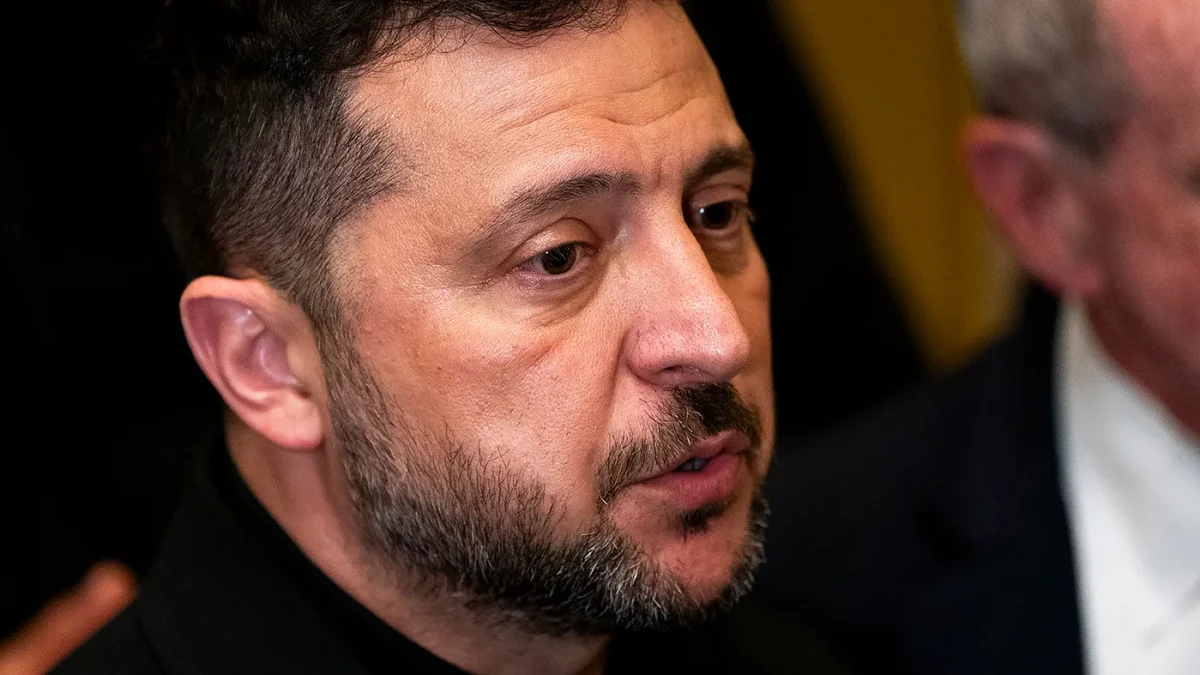
Table of Contents
Zelensky Warns That Voting Under Fire Would Fracture Ukraine’s Statehood
Provpnadvice.com – Ukraine’s president has drawn a firm line against holding national elections while Russian forces continue their invasion, arguing that the very act of organizing a ballot amid active combat would deal an existential blow to the country’s institutional integrity. Speaking to journalists on Sunday, Volodymyr Zelensky framed the question not as a matter of political preference but of national survival, insisting that his governing priority remains ending the conflict while keeping Ukraine intact as a sovereign entity.
“I believe that if we want to destroy the country, then we can move towards elections during this kind of war.”
The president elaborated that any electoral exercise under current conditions would carry what he described as a catastrophic risk to state cohesion. In his characterization, conducting a vote at this juncture would unleash a wave of division that could split the nation along competing loyalties at precisely the moment unity is most needed.
“That’s why my strategy is to steer the country toward an ending of the war and to preserve an independent and sovereign state.”
Constitutional Constraints and Public Sentiment
The debate over wartime voting is not purely rhetorical. Ukrainian legislation explicitly prohibits the conduct of elections while the country is under martial law, a provision enacted when Russia launched its full-scale invasion in February 2022. That legal barrier gives Zelensky’s position a formal anchor beyond mere political calculation.
Yet public opinion is not uniformly aligned with the president’s caution. A survey conducted earlier this month by the Kyiv International Institute of Sociology indicated that 57 percent of Ukrainians expressed a preference for holding elections once hostilities conclude. The finding underscores that a substantial majority still views the ballot as a right to be exercised after peace, rather than during it, but the margin leaves room for organized dissent.
The Fedorov Challenge and the Starlink Dispute
Zelensky’s remarks landed against the backdrop of a growing public challenge from Mykhailo Fedorov, the former defense minister who was removed from his post last week. Fedorov had addressed the nation the previous week, urging that Ukrainians be allowed to vote even while the war grinds on. He framed the issue in democratic terms, telling citizens that they could not be expected to accept perpetual opacity in governance.
“The people cannot endlessly live in a state where they do not understand why certain decisions are made.”
In a Sunday interview with the BBC, Fedorov pressed further, asserting that Zelensky owed the public explanations regarding corruption within the government apparatus. He also tied the electoral question to the broader struggle against Moscow, arguing that democratic self-determination should not be held captive by the Kremlin’s war machine.
“Democracy should not be the hostage of” Russian President Vladimir Putin.
“If I cannot share my ideas and be open about them with my own society, then what are we fighting for?”
Zelensky responded with a measured but pointed rebuke. While acknowledging a long personal and professional history with Fedorov, the president suggested that the former minister had been led astray, either by his own judgment or by external pressures.
“I really had and still have a very positive attitude toward Mykhailo. We have been through a lot together. But I believe that he himself goes, or is pushed, into the wrong things.”
The president appeared to connect the Fedorov episode to a separate controversy involving satellite communications. According to Zelensky, Fedorov had conveyed to him during a meeting that SpaceX had agreed to permit Ukraine to operate Starlink terminals on Russian territory. Zelensky subsequently raised the matter with President Donald Trump, only to learn that Elon Musk had rejected the proposal. The president characterized the episode as one factor among several that contributed to Fedorov’s removal from office.
Background: From Comedy Stage to Wartime Presidency
Zelensky first assumed the presidency in 2019, defeating incumbent Petro Poroshenko in a landslide that reflected widespread public fatigue with the old political establishment. Before entering politics, he had built a career as a comedian and television producer, a background that shaped his direct, informal communication style with the public.
The question of wartime elections had surfaced earlier in the year. Last December, following a telephone conversation with Trump—who had raised the topic—Zelensky told American reporters that Ukraine stood prepared to organize a vote if its partners pressed the issue.
“Since this question is raised today by the president of the United States of America, our partners, I will answer very briefly. Look, I am ready for elections. … I personally have the will and readiness to do this.”
That earlier flexibility, offered in a diplomatic context, contrasts with the more categorical language of his Sunday remarks. The shift suggests that the president now views the electoral question not as a technical scheduling problem but as a strategic variable that could, if mishandled, fracture the national consensus required to sustain a prolonged defense effort. For Ukrainians watching from occupied territories, displaced communities, and front-line regions, the stakes of that calculus remain intensely personal.
Related Reading
Frequently Asked Questions
What is Zelensky says wartime election would destroy?
Zelensky says wartime election would destroy is the main topic of this guide. The article explains the context, practical details, and next steps readers should understand.
Why does Zelensky says wartime election would destroy matter?
Zelensky says wartime election would destroy matters because readers are looking for a useful answer, not just a short summary. Good content should match search intent and help them decide what to do next.