Trump’s Taiwan two-step

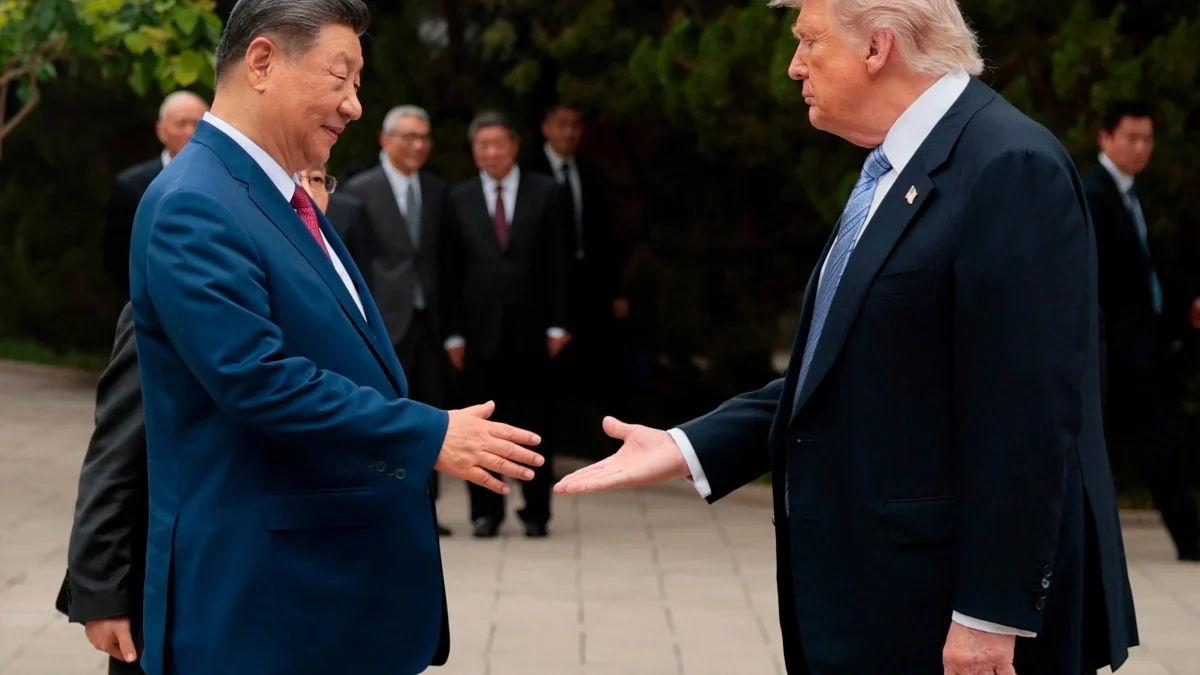
Table of Contents
The Taiwan Tango: How Trump’s Shifting Alliances Could Redraw Asia’s Security Map
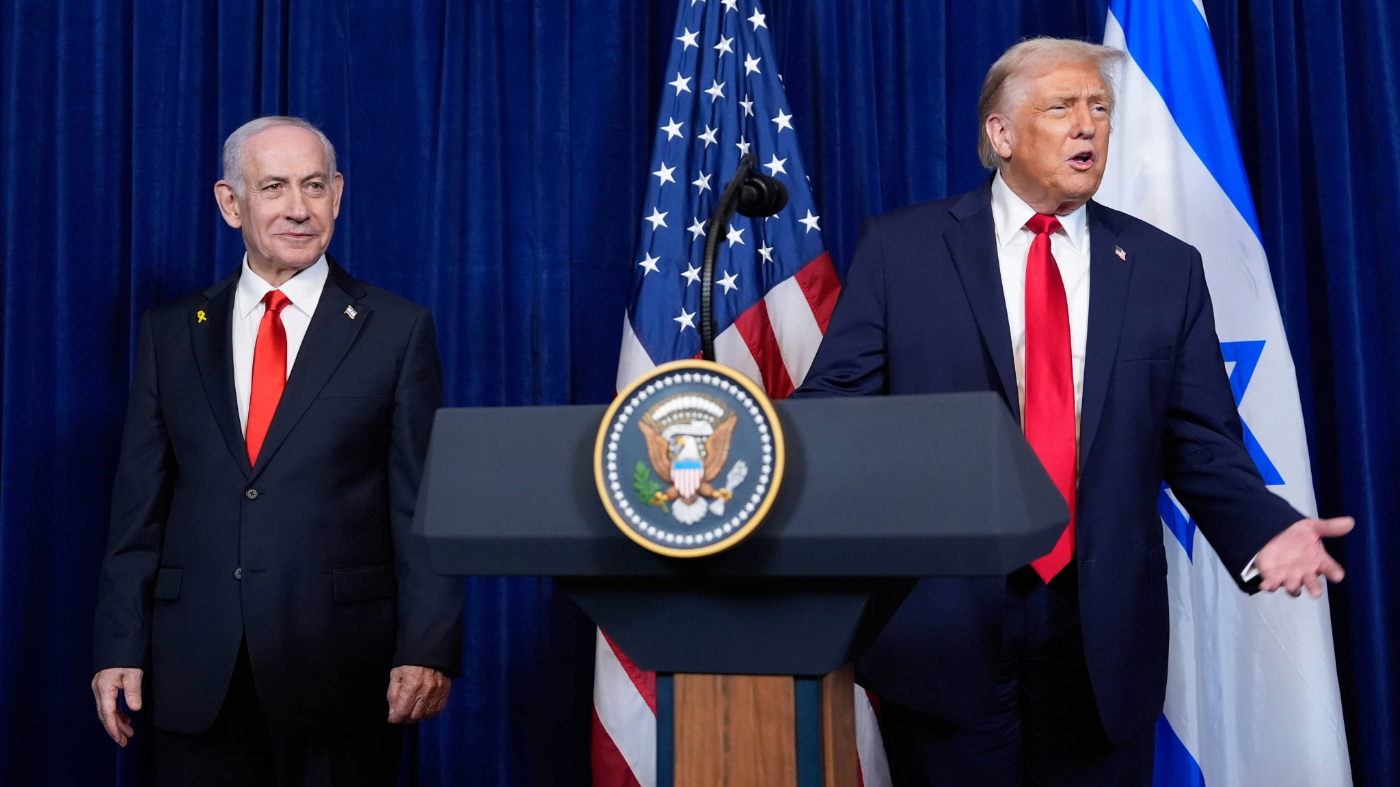
Provpnadvice.com – The question hanging over East Asian security in the coming weeks is not whether Washington will defend its oldest Pacific ally, but whether the White House will simply walk away from that obligation altogether. With a scheduled summit between President Trump and China’s President Xi Jinping on the horizon, speculation has intensified about a quiet diplomatic maneuver that would trade American military guarantees for a Chinese promise of restraint — a move critics are calling a “Taiwan two-step,” a tango in which the United States steps back just as Beijing steps forward.
Seoul’s Nuclear Question and the Hormuz Fracture
The broader context makes such a maneuver less surprising. South Korea, long treated as a cornerstone of the U.S. alliance architecture in the region, reportedly declined to assist the Trump administration in keeping the Strait of Hormuz open during the ongoing conflict with Iran. In response, the president curtailed joint military exercises with Seoul — a signal that the bilateral relationship had entered a period of strain. For a nation that has spent decades relying on the American nuclear umbrella, that signal carries an uncomfortable implication: if Washington can trim its commitments to a treaty ally in the Korean Peninsula, what assurance remains for Taipei?
Analysts have begun asking whether the logical endpoint of that erosion is a South Korean nuclear program. Once the perception takes hold that the United States cannot be counted on to honor its defense pledges, the domestic political cost of going nuclear drops sharply. The question is no longer hypothetical; it is a policy conversation now taking place in Seoul’s defense ministries and legislative chambers.
The Xi-Trump Summit and the Arithmetic of American Opinion
Before the Iran campaign consumed so much of Washington’s strategic bandwidth, Trump had already floated a familiar argument: roughly two-thirds of Americans would not support a war fought over Taiwan. That calculus, already shaky before the conflict, has only hardened in the aftermath of what many observers describe as a bungled military “excursion” into Iranian territory. Public appetite for another overseas war, particularly one against a nuclear-armed great power, is now thinner than at any point in recent memory.
Should Xi and Trump meet next month and strike a deal — a modus operandi in which Beijing pledges not to invade in exchange for American acquiescence — the strategic architecture of the Indo-Pacific would shift overnight. The United States would neither be prepared nor obligated to intervene militarily. In a best-case scenario for the White House, such an arrangement might even help extricate American forces from the Iran theater, easing the enormous logistical and political demands placed on the military.
Taiwan’s Internal Calculus and the Unbuilt Porcupine
Taiwan itself possesses the economic resources and industrial base to construct what defense planners call a “Porcupine Defense” — a layered system of coastal missiles, minefields, drone swarms, and hardened infrastructure designed to make any amphibious invasion so costly that Beijing would think twice. Yet that architecture remains largely unbuilt. The reason is political.
In the 113-seat Yuan, Taiwan’s legislature, the Kuomintang holds 52 seats and favors some form of reconciliation with the mainland. The Democratic Progressive Party holds 51 seats and insists on continued separation. Ten seats are held by smaller parties and independents. That near-parity means no single government can push through the enormous, unpopular spending required for a full Porcupine Defense without fracturing its own coalition. The result is a Taiwan that still leans on Washington for ultimate security guarantees — precisely the dependency a two-step deal would eliminate.
Beijing, for its part, appears to be playing the long game. The implicit assumption in Chinese strategic planning is that at some future point, Taipei will choose absorption, rendering the question of force moot. A Trump-Xi deal would simply accelerate that timeline.
China’s 1,500-Mile Kill Zone and the Limits of Conventional Deterrence
The military reality complicates any optimistic reading. The U.S. National Defense Strategy identifies deterring China in the Indo-Pacific through strength — not confrontation — as a top priority, specifically to prevent Chinese access to the first island chain. But the strategic ground truth is that Beijing has already built a formidable perimeter. With its longest-range missiles and aviation units, China’s weapons engagement zone extends more than 1,500 miles from its own borders.
In unclassified war games conducted by American think tanks and service academies, that zone holds surface naval forces and ashore installations at substantial risk. High casualties are not a worst-case scenario; they are a baseline expectation in any conventional conflict within that radius. A purely conventional deterrence posture, therefore, carries inherent fragility.
The Nuclear Insurance Policy: A Cold War Analogy
Washington does have a stronger alternative, one drawn from its own history. For much of the Cold War, the United States maintained the capacity to wage war at both the conventional and nuclear levels in defense of NATO. That posture rested on substantial tactical and battlefield nuclear arsenals alongside strategic forces delivered by bomber, ballistic-missile submarine, and land-based missile. The credibility of the deterrent came from the full spectrum, not from any single tier.
Trump could articulate a parallel insurance policy for the Taiwan Strait: the United States maintains both conventional and nuclear forces positioned to make any invasion of the island a catastrophe for the invader. The analogy to NATO is imperfect — there is no Article Five clause binding Washington to automatic intervention — but the threat itself, properly communicated, should be sufficient to deter Beijing from miscalculating.
“An attack against one shall be considered an attack against all.”
That Article Five language, absent from any U.S.-Taiwan treaty, is precisely what makes the nuclear-plus-conventional posture the more credible deterrent. Without it, the message to Beijing must be delivered through capability and rhetoric alone.
The Trifecta and the Execution Problem
From the president’s own perspective, a successful Taiwan two-step would complete a trifecta: North Korea and China both rendered cooperative, the Iran conflict resolved or contained, and U.S.-China relations reset. Ukraine would remain unresolved, but tensions on the Korean Peninsula would ease, the Taiwan commitment would be redefined, and the Indo-Pacific would enter a period of reduced friction.
The difficulty, of course, is execution. An administration whose track record of follow-through on complex multilateral arrangements is, at best, uneven, is being asked to negotiate simultaneously with Pyongyang, Beijing, and Tehran while managing domestic opposition to overseas entanglement. The strategic logic may be sound. The operational question is whether the machinery of government can deliver it without collapsing into contradiction.
Harlan Ullman, senior adviser at the Atlantic Council in Washington, chairman of a private company, and principal author of the “shock and awe” doctrine, offers the assessment above. His forthcoming book, co-written with Field Marshal Lord David Richards — former UK Chief of the General Staff — is titled Who Thinks Best Wins: How Decisive Strategic Thinking Will Prevent Global Chaos and is due out this fall.
Related Reading
Frequently Asked Questions
What is Trump s Taiwan two step?
Trump s Taiwan two step is the main topic of this guide. The article explains the context, practical details, and next steps readers should understand.
Why does Trump s Taiwan two step matter?
Trump s Taiwan two step matters because readers are looking for a useful answer, not just a short summary. Good content should match search intent and help them decide what to do next.